Common Yoga Retreat Mistakes: A Definitive 2026 Strategy Guide
The global proliferation of yoga retreats has transitioned the practice from a monastic tradition into a cornerstone of the modern “wellness economy.” This evolution, while increasing accessibility, has simultaneously introduced a layer of complexity for the practitioner. A retreat is no longer merely a series of physical postures in a scenic location; it is a high-stakes psychological and physiological intervention. When executed with precision, it functions as a systematic reset of the autonomic nervous system. When approached with insufficient rigor, it can inadvertently exacerbate the very stressors it was designed to alleviate.
In the current landscape of 2026, the primary challenge facing attendees is the “Curriculum-Environment Mismatch.” This occurs when the intensity of the physical practice is poorly aligned with the environmental stressors—such as altitude, heat, or dietary shifts—resulting in a net depletion of the body’s resources. Furthermore, the commodification of “Zen” often creates a veneer of tranquility that masks significant operational deficits. For the discerning practitioner, the goal is to move beyond the aesthetic of the retreat and into a deep audit of its structural integrity.
Understanding the failure modes of these immersions requires an analytical lens. It is not merely about finding a “good” teacher or a “beautiful” resort. It is about understanding how different lineages of movement interact with individual metabolic profiles, and how the “social architecture” of a group setting can either facilitate deep introspective work or trigger defensive ego responses. This article serves as a definitive reference for identifying and mitigating the systemic errors that compromise the efficacy of yoga immersions, ensuring that the return on investment—both temporal and financial—is realized through durable neurobiological shifts.
Understanding “Common Yoga Retreat Mistakes”
To accurately analyze common yoga retreat mistakes, one must first acknowledge the “Aesthetic Trap.” The modern wellness industry heavily leverages social signaling—pristine landscapes, minimalist architecture, and idealized physical forms—to sell a state of mind. A fundamental error occurs when a practitioner conflates these external aesthetics with the internal rigor of the practice. The highest-tier retreats are often those that provide the most “Frictionless Infrastructure,” allowing the student to engage with the discomfort of physical and mental training without the distraction of logistical incompetence.
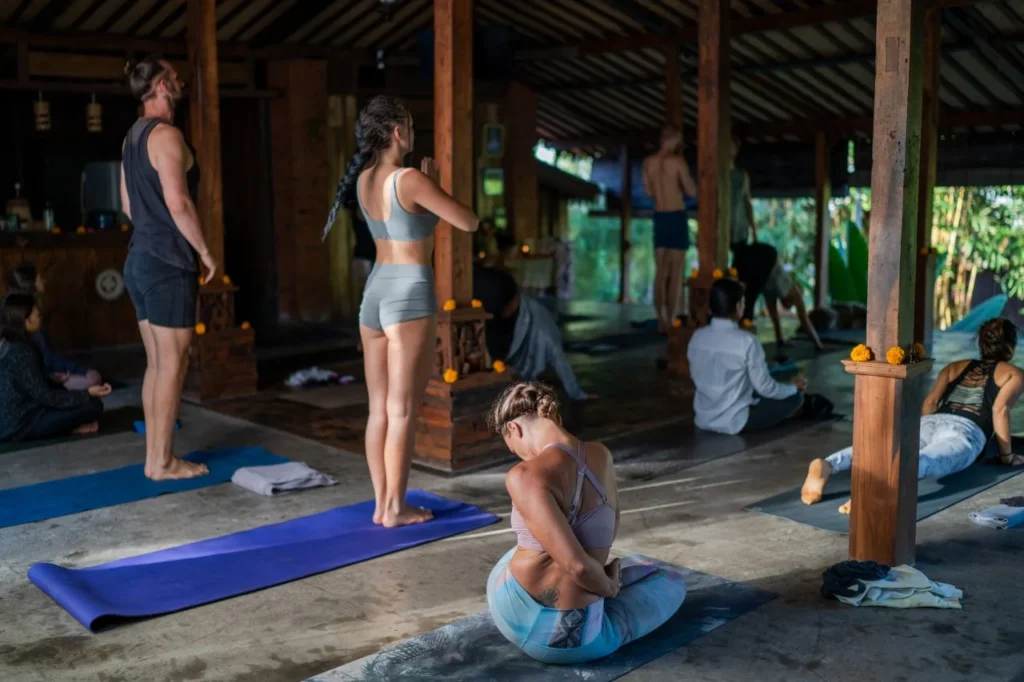
Multi-perspective evaluation reveals that oversimplification is a pervasive risk. Many attendees view a retreat as a vacation with “extra stretching,” failing to account for the “Hormetic Load” of a multi-day immersion. Doubling or tripling one’s usual physical activity while simultaneously altering one’s diet and sleep environment is a significant biological challenge. Without a “Pacing Protocol,” the body can enter a state of chronic sympathetic activation—the exact opposite of the intended parasympathetic “Rest and Digest” state.
Furthermore, there is the “Spiritual Bypassing” risk. This involves using the retreat as a temporary escape from unresolved psychological or professional issues rather than a laboratory for developing the resilience to face them. A retreat that focuses exclusively on “good vibes” without providing the psychological scaffolding to process the “shadow” elements of the self—such as frustration, boredom, or grief—is essentially providing a temporary analgesic rather than a permanent cure.
Contextual Background: The Evolution of Yoga Tourism
The systemic evolution of yoga retreats can be categorized into three distinct phases. The first was the “Monastic/Ashram Era,” characterized by extreme austerity and a focus on philosophy over physique. These were high-barrier-to-entry environments where the “mistakes” were often related to physical neglect or lack of medical oversight.
The second phase was the “Commercial Explosion” (roughly 2000–2015), where yoga became a major driver of international tourism. This era saw the rise of the “Standardized Vinyasa” model, where retreats were marketed to a wide demographic with varying levels of physical preparedness. The errors in this phase were largely related to “Generic Programming”—the failure to adapt a one-size-fits-all sequence to a diverse group of bodies.
Today, we are in the “Specialized Bio-Optimization Era.” Modern retreats often integrate EEG monitoring, genetic testing, and complex nutritional protocols. While this offers high precision, it introduces a new failure mode: “Technical Overload.” When the technology of the retreat becomes more prominent than the practice of presence, the participant may leave with data, but without a lived experience of equanimity.
Conceptual Frameworks for Evaluating Immersion Quality
1. The “Allostatic Load” Model
This framework evaluates a retreat based on the total pressure it places on the participant’s biological systems.
-
Mechanism: A successful retreat maintains a “Hormetic Sweet Spot”—enough stress (through practice and heat) to trigger adaptation, but not so much that it leads to systemic inflammation or injury.
-
Failure Mode: Selecting an “Advanced Power Yoga” retreat in a tropical climate for a practitioner who lives in a sedentary, air-conditioned environment.
2. The “Attentional Anchor” Framework
This model ranks retreats by their ability to foster “Sustained Attentional Focus.“
-
Factor: Does the retreat provide a “Digital Fast” or “Noble Silence” protocol?
-
Insight: Retreats that allow constant smartphone use fail this framework, as the brain remains tethered to the “Default Mode Network” rather than entering the “Flow State” associated with deep practice.
3. The “Transferability” Mental Model
Evaluates the retreat by the durability of the “State-to-Trait” transfer.
-
Question: Does the program provide the tools to replicate the experience at home, or does it create a dependency on the specific environment and teacher?
Taxonomy of Error: Categories and Functional Trade-offs
Identifying common yoga retreat mistakes requires a categorical breakdown of where the system typically breaks down.
| Category | Typical Mistake | Functional Trade-off | Resulting Failure |
| Physical | Over-practicing in the first 48 hours | Enthusiasm vs. Tissue Integrity | Acute injury/Adrenal fatigue |
| Environmental | Ignoring local climate/altitude | Scenic beauty vs. Physiological strain | Dehydration/Altitude sickness |
| Nutritional | Radical dietary shifts (e.g., sudden raw vegan) | “Cleanliness” vs. Digestive stability | GI distress/Blood sugar swings |
| Social | Lack of boundary setting with the group | Community vs. Introspective depth | Emotional exhaustion |
| Logistical | Tight travel connections | Convenience vs. Mental calm | Elevated cortisol upon arrival |
| Technical | Choosing a lineage mismatched to goals | Intensity vs. Desired outcome | Frustration/Lack of progress |
Decision Logic: The “Goal-Lineage” Alignment
If your goal is “Injury Recovery,” a Vinyasa-heavy retreat is a category error. One should prioritize Iyengar or Restorative lineages with a high teacher-to-student ratio.
Detailed Real-World Scenarios and Second-Order Effects
Scenario 1: The “Tropical Heat” Depletion
-
Context: A practitioner from a temperate climate attends an intensive 7-day hot yoga retreat in Bali.
-
The Error: The individual attempts to maintain their usual high-protein, high-caffeine diet while practicing 4 hours a day in 90% humidity.
-
Second-Order Effect: By Day 4, the body’s electrolyte balance is compromised. The practitioner experiences “Brain Fog” and irritability, which they misinterpret as a “spiritual clearing” when it is actually acute hyponatremia.
Scenario 2: The “Social Overload” Introvert
-
Context: An introverted executive seeks a retreat for “silence and reflection” but chooses a popular, social-heavy “Yoga & Surf” camp.
-
The Error: Failing to audit the “Social Architecture.” The retreat requires communal dining and group excursions.
-
Second-Order Effect: Instead of introspective work, the practitioner spends their energy on social performance, returning to work more socially exhausted than when they left.
Economic and Planning Dynamics: The True Cost of Error
The financial investment in a yoga retreat extends beyond the tuition. One must account for the “Opportunity Cost of Recovery Time.“
| Investment Tier | Typical Fee (USD) | Infrastructure Complexity | Hidden Cost of Error |
| Boutique/Luxury | $4,000 – $8,000 | High-end medical & spa tech | “Pampering” masks lack of depth |
| Professional | $1,500 – $3,500 | Dedicated retreat centers | Travel logistics/Visa fees |
| Ashram/Traditional | $500 – $1,200 | Simple/Aseptic | Physical discomfort/Low privacy |
The Variability of Value: A $5,000 retreat with an unskilled teacher is more “expensive” than a $1,000 retreat with a master instructor. The “Value” is measured in the “Duration of the Benefit”—how many months after the retreat do you still feel the physiological effects?
Tools, Strategies, and Protective Systems
To mitigate common yoga retreat mistakes, the practitioner should employ a “Pre-Immersion Protocol”:
-
The “Taper” Week: Reduce caffeine and work hours 5 days before departure. This prevents the “Caffeine Headache” from coinciding with Day 1 of the retreat.
-
The “Hydration Load”: Increase mineralized water intake 48 hours before flying. Airplane travel is a major source of early-retirement inflammation.
-
Proprioceptive Anchors: Bring your own mat or props. Familiar tactile cues help the nervous system feel “safe” in a new environment, facilitating deeper states of meditation.
-
The “Check-In” Journal: A morning practice of noting physical sensations (DOMS, heart rate, sleep quality) to determine if the day’s practice intensity should be scaled back.
-
The “Social Opt-Out” Clause: Mentally (and if possible, verbally) establish with the group that you may skip communal meals or outings to preserve energy.
-
Teacher Vetting (Beyond Instagram): Look for lineages, years of study, and specifically, their history of teaching beginners versus advanced practitioners.
Risk Landscape and Compound Failure Modes
A single mistake is often manageable. The danger lies in “Compounding Failures”—when multiple systemic errors occur simultaneously:
-
The “Travel-Diet-Practice” Triad: Arriving on a red-eye flight (sleep deprivation), immediately switching to a low-calorie vegan diet (metabolic shift), and participating in a 90-minute “Opening Flow” (physical strain). This is a recipe for a “Nervous System Crash” by Day 3.
-
The “Lineage Mismatch” Injury: A student with lumbar instability is attending a Yin Yoga retreat without knowing how to engage their core for joint protection. In Yin, the “mistake” is staying too long in a compromised position.
-
Logistical Instability: Choosing a retreat with no clear medical evacuation plan in a remote location. In 2026, “Health Security” is a non-negotiable component of a professional-grade retreat.
Governance: Post-Retreat Integration and Adaptation
The most frequent error in the entire yoga retreat lifecycle is “Sudden Re-entry.“
-
The “48-Hour Buffer”: Never return to work the morning after landing. The “Grip of Reality” can cause a rapid spike in cortisol, negating the neurological down-regulation achieved during the retreat.
-
Review Cycles: A structured review 1 week, 1 month, and 3 months post-retreat.
-
Week 1: Have I maintained the morning ritual?
-
Month 1: Has my reactive temper (the “Vagal Tone”) improved?
-
Month 3: What aspect of the retreat was a “state” change (temporary) vs. a “trait” change (permanent)?
-
Measurement, Tracking, and Evaluation of Success
Success should be tracked using both quantitative and qualitative signals.
-
Leading Indicator: Heart Rate Variability (HRV). A successful retreat should show a steady upward trend in HRV, indicating improved nervous system resilience.
-
Lagging Indicator: “The Conflict Reaction.” When you encounter a major stressor at home, do you revert to old patterns of reactivity, or is there a “Gap” where you can choose your response?
-
Qualitative Signal: “Visual Clarity and Saturation.” Many practitioners report that colors seem more vivid and sounds more distinct after a successful immersion—a sign of “Sensory De-habituation.“
Common Misconceptions and Oversimplifications
-
Myth: “A retreat is where you finally master advanced poses.“
-
Correction: A retreat is where you master the fundamentals so well that advanced poses become a natural byproduct.
-
Myth: “The most famous teachers give the best retreats.“
-
Correction: Fame often correlates with “Performance.” A less-known teacher with a smaller group often provides more eyes-on-the-student correction, which is the key to safety.
-
Myth: “If I’m not sore, I didn’t work hard enough.“
-
Correction: In yoga, chronic soreness is often a sign of “Ego-driven Practice” rather than “Presence-driven Practice.“
-
Myth: “Retreats are only for advanced students.“
-
Correction: Beginners often benefit more from retreats because they can learn correct alignment without the bad habits developed in a weekly drop-in class.
Ethical and Practical Considerations
In 2026, the ethical footprint of a retreat is as important as its physical one. Consider the “Impact on Local Infrastructure.” Does your luxury retreat divert water from local farmers? Is the staff paid a living wage, or is the “Zen” built on exploited labor? A truly “Yogic” approach includes Ahimsa (non-harming) toward the community and environment. Practically, choose retreats that utilize “Slow Travel”—prioritizing longer stays in one location over “Yoga Hops” that increase your carbon footprint and decrease your depth of focus.
Conclusion
The successful yoga immersion is a masterclass in “Biopsychosocial Alignment.” By identifying and neutralizing common yoga retreat mistakes, the practitioner transitions from a passive consumer to an active architect of their own well-being. The retreat is not an escape from reality; it is a rigorous training ground for it. When we audit the environment for safety, align the practice with our biological capacity, and protect our attention with discipline, the yoga mat becomes more than a place of exercise—it becomes a platform for radical clarity. The final measure of a retreat’s success is not the beauty of the photos taken, but the depth of the peace brought back into the noise of the world.