Best Wellness Retreats Options: A Definitive Guide to Global Health Travel
The global shift toward “wellness” is often dismissed as a contemporary trend, yet it represents a fundamental recalibration of how individuals manage the intersection of health, productivity, and personal longevity. As the boundaries between professional availability and private recovery blur, the necessity for structured, immersive environments has moved from a luxury indulgence to a strategic necessity. The market for these experiences is no longer a monolith; it has fractured into highly specialized domains ranging from clinical biohacking to silent monastic retreats.
Identifying the most effective path requires more than a cursory search for a vacation spot. It demands an understanding of the physiological and psychological mechanisms that these environments aim to trigger. A true wellness retreat is not merely a “break” from routine; it is a controlled intervention designed to reset specific biological or cognitive baselines. Whether the goal is nervous system regulation, metabolic flexibility, or emotional processing, the internal logic of the retreat must align with the participant’s specific deficits.
This analysis explores the systemic layers of the wellness industry, moving past the aesthetic of “relaxation” to examine the rigorous frameworks that define high-tier programs. We will examine how different methodologies—such as the European medical spa tradition versus the Eastern contemplative model—provide distinct outcomes. By the end of this exploration, the criteria for evaluating the best wellness retreat options will shift from a focus on amenities to a focus on clinical and experiential efficacy.
Understanding “Best Wellness Retreats Options”
The phrase best wellness retreats options is frequently used as a catch-all for any travel experience that isn’t explicitly hedonistic. However, from a professional editorial perspective, “best” is a subjective variable that depends entirely on the intended intervention. To some, the best option is a medically supervised facility in the Swiss Alps specializing in cellular regeneration; to others, it is a primitive ashram in Rishikesh focused on ego dissolution.
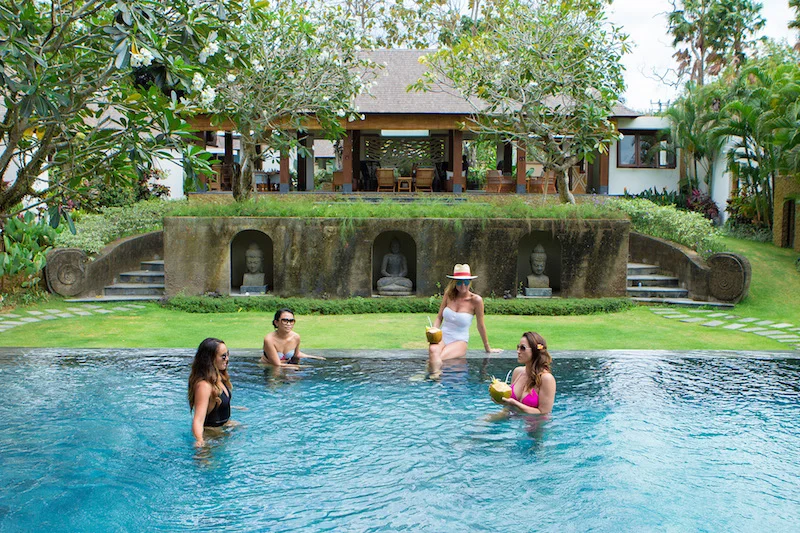
The primary risk in the current market is the “dilution of intent.” Many traditional resorts have simply rebranded their spas as wellness centers without changing their underlying operational philosophy. A genuine wellness retreat prioritizes the outcome over the experience. This means the curriculum is often challenging, restrictive, or demanding. If a program promises “wellness” while offering an open bar and a lack of structured programming, it is likely a leisure product rather than a wellness intervention.
Furthermore, the “options” available are now globally distributed, creating a paradox of choice. One must distinguish between:
-
Preventative Medical Retreats: Focus on diagnostics, blood work, and longevity.
-
Psychological/Emotional Retreats: Focus on trauma, burnout, and grief.
-
Physical/Performance Retreats: Focus on fitness, mobility, and metabolic health.
Failing to categorize these correctly leads to a mismatch between a participant’s needs and the retreat’s capabilities, resulting in a low return on both time and financial investment.
Historical and Systemic Evolution
The concept of traveling for health—”taking the waters”—dates back to the Roman Empire and the subsequent rise of European thermal towns like Bath, Vichy, and Baden-Baden. In the 18th and 19th centuries, these locations served as the original wellness retreats, where the elite sought relief from the ailments of the Industrial Revolution. These were not just social clubs; they were early medical hubs where doctors prescribed specific mineral water compositions and durations of exposure.
In the 20th century, this evolved into two distinct branches. In the West, the “fat farm” emerged in the mid-century, focusing on weight loss and aesthetics, which eventually matured into the sophisticated luxury destination spas of the 1980s. Simultaneously, the 1960s and 70s saw a Western fascination with Eastern spirituality, leading to the rise of yoga and meditation retreats that prioritized the “inner landscape” over physical biomarkers.
Today, we are seeing a “Great Convergence.” The best wellness retreat options now often synthesize these two lineages. You will find neuroscientists collaborating with meditation masters, and traditional Ayurvedic practitioners working alongside specialists in IV nutrient therapy. This synthesis reflects a more holistic modern understanding of health: that the mind and body are a single, integrated system where a deficit in one inevitably compromises the other.
Conceptual Frameworks and Mental Models
To navigate the high-end wellness landscape, it is useful to apply specific mental models that help categorize the type of change a retreat facilitates.
1. The Hormetic Stress Model
This framework views wellness as the application of “good stress” (hormesis) to trigger biological resilience. Retreats following this model utilize cold plunges, heat exposure (saunas), fasting, and high-intensity movement. The goal is to “shock” the system out of the lethargy of modern comfort.
-
Limits: Over-application can lead to adrenal fatigue if the participant is already severely burnt out.
2. The Parasympathetic Dominance Model
This is the inverse of the hormetic model. It assumes the participant is in a state of chronic “fight or flight” and requires an environment that forces the nervous system into a “rest and digest” state. This includes forest bathing, restorative yoga, and craniosacral therapy.
-
Limits: May feel “unproductive” to high-achieving individuals, leading to restlessness or early departure.
3. The Biopsychosocial Model
This model treats health as an intersection of biological health, psychological state, and social connection. These retreats often include group work, communal dining, and educational seminars alongside physical treatments.
-
Limits: The social aspect can be draining for introverts or those needing deep solitude.
Key Categories and Methodological Trade-offs
When evaluating the best wellness retreats, the following table provides a high-level comparison of the most prevalent methodologies found in the current global market.
| Category | Primary Focus | Typical Intervention | Primary Trade-off |
| Medical/Longevity | Physical Biomarkers | Diagnostics, Stem Cells, IVs | Very high cost; clinical “vibe” |
| S.ilent/Monastic | Mental Clarity | Vipassana, Meditation | Mentally grueling; no amenities |
| Ayurvedic/Traditional | Elemental Balance | Panchakarma, Herbs, Diet | Requires long duration (14+ days) |
| Fitness/Bootcamp | Physical Capacity | Strength, Hiking, Caloric Control | Risk of injury; physical exhaustion |
| Biohacking | Tech-Optimized Health | Red Light, PEMF, Cryo | Can feel overly “gadget-heavy.” |
The Decision Logic
Choosing between these requires a cold assessment of your current “bottleneck.” If you are physically fit but mentally fragmented, a fitness bootcamp will only exacerbate your issues. Conversely, if your blood markers are trending toward metabolic syndrome, a silent retreat will not address the physiological urgency. The most effective approach is often “compensatory”—choose the retreat that offers the exact opposite of your daily environment.
Detailed Real-World Scenarios
Scenario A: The High-Functioning Burnout
-
The Profile: An executive working 80 hours a week, experiencing “wired but tired” symptoms, high cortisol, and sleep fragmentation.
-
The Selection: A Parasympathetic-focused retreat (e.g., a luxury spa in the Japanese countryside).
-
Failure Mode: The participant spends the first three days checking emails, preventing the nervous system from ever “dropping” into a recovery state.
-
Second-Order Effect: Without a proper reintegration plan, the sudden return to a high-stress environment can cause a “rebound” effect, leading to deeper exhaustion than before.
Scenario B: The Post-Pathology Recovery
-
The Profile: An individual recovering from a long-term illness or major life surgery, cleared for travel but lacking vitality.
-
The Selection: A Medical/Longevity retreat in Europe (e.g., Switzerland or Austria) with 24/7 physician oversight.
-
Constraint: The high cost of medical-grade wellness often limits the duration of the stay, potentially cutting the recovery process short.
Economic Dynamics: Direct and Opportunity Costs
The financial architecture of a top-tier wellness retreat is complex. One must account for the “All-In” cost, which often exceeds the initial booking fee.
| Cost Component | Range (USD/Week) | Notes |
| Base Tuition/Room | $3,500 – $15,000 | Includes basic meals and lodging. |
| Specialized Testing | $1,000 – $5,000 | DNA, Gut Biome, and Advanced Bloodwork. |
| Supplementary Treatments | $500 – $3,000 | Extra massages, private coaching, and IV drips. |
| Travel & Logistics | $1,000 – $4,000 | Often, remote locations require private transfers. |
| Opportunity Cost | Variable | The cost of being “offline” and unavailable for work. |
Risk Landscape and Failure Modes
Wellness is not without risk. The “wellness-to-quackery” pipeline is a legitimate concern for those seeking the best wellness retreat options.
-
De-skilling: Relying so heavily on retreat environments that the individual loses the ability to maintain health in “real life.”
-
Iatrogenic Harm: Improperly administered detoxes or extreme fasting protocols can cause kidney stress or electrolyte imbalances.
-
Spiritual Bypassing: Using meditation or “vibe-based” retreats to avoid addressing deep-seated psychological or medical issues that require professional clinical intervention.
Measurement, Tracking, and Evaluation
A common mistake is treating a wellness retreat as a “one-off” event with no follow-up. To ensure topical authority and personal ROI, one must track specific indicators.
-
Leading Indicators (During the Retreat): Heart Rate Variability (HRV) trends, Deep Sleep duration, and Subjective Well-Being (SWB) scores.
-
Lagging Indicators (3-6 Months Post-Retreat): Sustained reduction in resting heart rate, changes in fasting glucose levels, and the durability of new behavioral habits.
Common Misconceptions
-
Myth: The more expensive the retreat, the better the results.
-
Correction: Price often reflects the luxury of the linens and the rarity of the location, not necessarily the efficacy of the health protocol.
-
Myth: You can “fix” a year of bad habits in one week.
-
Correction: A retreat is a catalyst for change, not a cure. The work begins the day you return home.
Conclusion
The pursuit of the best wellness retreat options is a journey toward systemic self-optimization. It requires a move away from the “pampering” mindset of the past toward a more rigorous, data-driven, or deeply contemplative approach. By understanding the frameworks of hormesis, parasympathetic recovery, and clinical diagnostics, an individual can select an intervention that provides more than a teprieve—it can provide a permanent upgrade to their quality of life. The ultimate success of a retreat is measured not by how you feel while you are there, but by how much of that state you can sustain in the face of modern chaos.