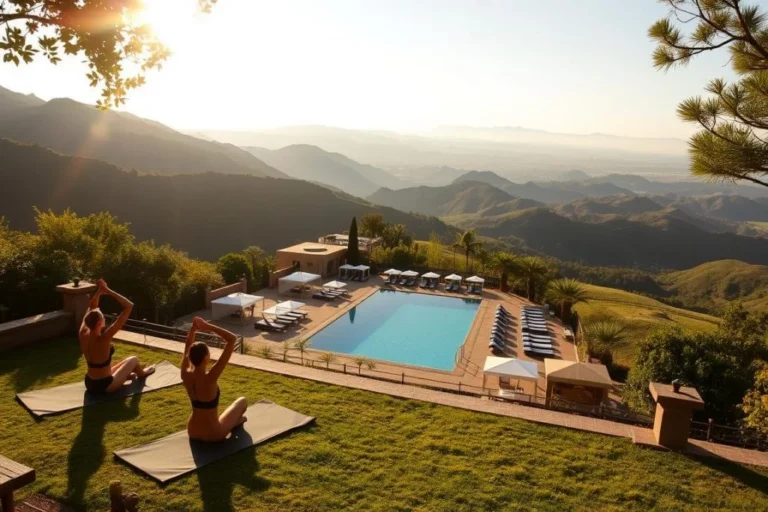
Best Wellness Retreats for Stress: The Definitive 2026 Strategy Guide
In the hyper-accelerated cadence of 2026, the concept of “stress” has undergone a profound redefinition. No longer viewed as a transient emotional state, stress is now recognized by clinical and psychological communities as a systemic biological load—a “wear and tear” on the body’s regulatory systems known as allostatic load. As the boundaries between professional availability and private sanctuary have effectively dissolved, the demand for the best wellness retreats for stress has pivoted. These are no longer mere escapes into luxury; they are becoming essential “re-calibration centers” for a population operating in a state of chronic sympathetic nervous system dominance.
For the modern seeker, a retreat is a high-stakes investment of two non-renewable resources: time and cognitive attention. The paradox of stress recovery is that the very act of choosing a solution can become a source of additional strain. The market is saturated with options ranging from monastic silence in the Himalayas to high-tech longevity clinics in the Swiss Alps. Navigating this landscape requires more than a casual review of amenities; it demands an analytical understanding of the mechanics of the “Relaxation Response” and how different environments facilitate the transition from “Fight-or-Flight” to “Rest-and-Digest.”
This article serves as a definitive pillar for those seeking to move beyond surface-level relaxation. By deconstructing the biological, environmental, and psychological pillars of high-fidelity recovery, we provide a framework for evaluating where and how to truly offload systemic tension. The goal is not merely to find a place to rest, but to identify an intervention that yields a “Durability Dividend”—a sustained increase in resilience that survives the return to high-pressure environments.
Understanding “Best Wellness Retreats for Stress”

To accurately identify the best wellness retreats for stress, one must first dismantle the “Amenity Fallacy.” A common misunderstanding is that high-end luxury—plush linens, gourmet dining, and aesthetic infinity pools—is synonymous with stress reduction. While comfort is a prerequisite for safety, true stress recovery is a neurobiological process. A retreat’s efficacy is determined by its “Vagal Tone Index”—the degree to which its curriculum and environment effectively stimulate the parasympathetic nervous system.
Oversimplification in this space often leads individuals to book “Yoga Holidays” when they actually require “Burnout Interventions.” These are distinct categories with vastly different metabolic demands. A high-intensity Vinyasa schedule might actually exacerbate cortisol levels in a person already suffering from adrenal fatigue. Conversely, a purely passive spa stay may fail to provide the cognitive tools necessary to handle the stressors that caused the depletion in the first place.
The risk of choosing a retreat based on visual appeal alone is the “Leisure Friction” effect. If a retreat is located in a remote area requiring 24 hours of travel and multiple transfers, the physiological cost of the journey may outweigh the benefit of a three-day stay. The best retreats in 2026 are those that offer a clear “Dosage Model”: they understand the relationship between the duration of stay, the intensity of the intervention, and the specific stress profile of the participant (e.g., cognitive, emotional, or physical exhaustion).
Contextual Background: The Evolution of Stress Interventions
The history of stress management has moved from ancient philosophical stoicism to 20th-century clinical psychology, and finally to 21st-century bio-optimization. In the 1950s, after Hans Selye popularized the term “stress,” the early “health farms” focused on simple physical rest. Today, we have entered the era of “Precision Restoration.”
The modern retreat landscape is a response to the “Poly-Crisis” of the 2020s—a combination of digital saturation, environmental toxins, and geopolitical uncertainty. This has birthed the “Bio-Somatic” retreat, which utilizes real-time data to adjust protocols. We are no longer guessing if a meditation session worked; we are measuring the resulting increase in heart rate variability (HRV) and the suppression of salivary cortisol. This data-driven approach marks a departure from the “woo-woo” stigma of the past, placing the best wellness retreats for stress firmly within the realm of preventive healthcare.
Conceptual Frameworks and Mental Models
1. The “Secure Base” Framework
Borrowed from attachment theory, this model posits that for a person to truly “let go” of stress, they must feel they are in a 100% predictable and safe environment. This includes “Cognitive Offloading,” where every detail—from meal times to clothing—is pre-managed, allowing the executive function of the brain to enter a dormant state.
2. The “Hormetic Stress” Paradox
This framework suggests that some stress is actually the cure for chronic stress. Controlled stressors like cold plunges, saunas, or high-altitude hiking trigger “Heat Shock Proteins” and “Mitophagy” (cellular cleanup).
-
Limit: This model is dangerous for those in the final stages of clinical burnout, where any additional stressor can lead to a systemic crash.
3. The “Biophilic Synchronization” Model
This model emphasizes the role of circadian rhythm. The best retreats utilize “Light Hygiene” and grounding to re-sync the body’s internal clock with the solar cycle, which is the foundational regulator of the stress hormone cortisol.
Key Categories of Stress Recovery Immersions
| Category | Primary Mechanism | Trade-offs | Ideal For |
| Somatic/Body-Based | Massage, Hydrotherapy, Breathwork | High physical comfort; low cognitive “tools.” | Physical tension; sensory overload |
| Nature/Ecological | Forest Bathing, Wilderness Solo | High “awe” factor; logistical difficulty | Creative block; “Nature Deficit.” |
| Clinical/Medical | Diagnostics, IV Therapy, Biofeedback | High data precision; “hospital” feel | Chronic illness; high-performance data |
| Silent/Contemplative | Vipassana, Monastic Solitude | Radical mental reset; high emotional discomfort | Cognitive noise; decision fatigue |
| Movement/Active | Hiking, Surf-Therapy, HIIT | High endorphin release; risk of over-training | High-energy individuals; frustration |
| Psychological/Coaching | 1:1 Therapy, Goal Setting | High intellectual clarity; can feel like “work.” | Transitional periods; relational stress |
Decision Logic: The “Stress-State” Audit
If your stress manifests as frenetic energy, choose a Silent/Contemplative or Nature-based retreat to force a down-regulation. If your stress manifests as lethargy or depression, choose an Active/Movement retreat to “jump-start” the system.
Detailed Real-World Scenarios and Decision Logic
Scenario 1: The “Digital Depletion” (Silicon Valley/NYC Executive)
-
The Situation: Constant connectivity, 12-hour screen time, fragmented sleep.
-
The Best Choice: A “Tech-Sequestration” retreat (e.g., Getaway or Digital Detox camps).
-
Failure Mode: Selecting a luxury hotel with high-speed Wi-Fi, which tempts “work-creep” during downtime.
Scenario 2: The “Compassion Fatigue” (Healthcare/Caregivers)
-
The Situation: High emotional labor, secondary trauma, neglect of self.
-
The Best Choice: A Somatic/Body-Based retreat focused on “fawning” recovery and boundary work.
-
Second-Order Effect: The participant may experience a significant “Emotional Purge” (crying or anger) on Day 3 once the nervous system feels safe enough to release.
Planning, Cost, and Resource Dynamics
The “Value-at-Risk” of a failed retreat is not just the price of the ticket, but the lost opportunity for recovery.
| Tier | Price (USD / Night) | Value Driver | Hidden Costs |
| Luxury Boutique | $1,500 – $3,500 | 1:1 attention; radical privacy | Travel logistics; tips |
| Destination Wellness | $600 – $1,200 | Structured curriculum; community | Add-on treatments ($200+) |
| Specialist/Clinical | $2,000+ | Advanced diagnostics (DNA/Blood) | Follow-up supplements |
| Accessible/Group | $250 – $500 | Shared experience; simple living | Shared bathrooms; limited diet |
Opportunity Cost: Consider the “Integration Gap.” A 3-day retreat with a 2-day travel tail has a higher “Stress-to-Rest” ratio than a 5-day local retreat.
Tools, Strategies, and Support Systems
The best wellness retreats for stress empower participants with a portable “Nervous System Toolkit.”
-
Vagal Toning Techniques: Gargling, singing, or specific breathwork (e.g., 4-7-8) to trigger the vagus nerve.
-
Blue Light Mitigation: Providing amber glasses or “analog” evenings to protect melatonin production.
-
Peripheral Vision Training: Learning to shift from “focal” (stress) vision to “panoramic” (calm) vision.
-
Adaptogenic Integration: Education on botanicals (Ashwagandha, Reishi) that modulate the HPA axis.
-
Micro-Recovery Protocols: Learning 60-second “circuit breakers” to use during the workday.
-
Somatic Experiencing: Tools to “shake out” or physically discharge adrenaline after a high-stress meeting.
Risk Landscape and Failure Modes
Even the most well-intended retreat can fail if “Compounding Risks” are not managed.
-
The “Intimacy Trap”: Small group retreats can be stressful for introverts who feel forced into social vulnerability.
-
The “Detox Crisis”: Radical changes in diet (e.g., removing caffeine and sugar) can lead to migraines and irritability in the first 48 hours, often called the “healing crisis.”
-
Post-Retreat “Re-entry Shock”: Returning to a toxic environment without an “Integration Buffer,” leading to a state of resentment that is worse than the original stress.
Governance, Maintenance, and Long-Term Adaptation
A retreat is a “Systemic Reset,” but maintenance is required to prevent “Systemic Drift.”
-
The 90-Day Review: Re-evaluating your stress levels every quarter using a standardized tool like the Perceived Stress Scale (PSS).
-
Micro-Retreat Triggers: Defining a “Red Line” (e.g., three nights of less than 6 hours of sleep) that triggers a mandatory 24-hour digital fast.
-
The “Environment Audit”: Adjusting your home and workspace based on biophilic principles learned at the retreat.
Measurement, Tracking, and Evaluation
How do you know if the best wellness retreats for stress actually worked for you?
-
Leading Indicator: Improved HRV (Heart Rate Variability) while sleeping.
-
Qualitative Signal: “The Decision Gap”—feeling a longer pause between a stressor and your reaction to it.
-
Lagging Indicator: A decrease in physical symptoms (e.g., tension headaches, digestive issues) over the following month.
Common Misconceptions and Oversimplifications
-
Myth: “I need to ‘clear my mind’ of all thoughts.”
-
Correction: Stress management is about changing your relationship to thoughts, not eliminating them.
-
Myth: “A weekend is enough.”
-
Correction: It takes the brain at least 72 hours to fully exit “Survival Mode.” Anything less is just a nap.
-
Myth: “Stress is entirely in the head.”
-
Correction: Stress is a whole-body state. You cannot think your way out of a body that is flooded with cortisol.
Conclusion
The pursuit of the best wellness retreats for stress is ultimately a pursuit of human sovereignty. In a culture that commodifies our attention and rewards our exhaustion, taking a strategic pause is an act of quiet rebellion. However, the efficacy of that pause depends on intellectual honesty. Are you seeking a distraction, or are you seeking a transformation? By choosing a retreat that aligns with your specific physiological needs and provides the tools for long-term governance, you move beyond the “vacation high” and into a state of sustainable, resilient vitality. The best sanctuary is not a place you go, but a state of being you learn to carry back with you.