Best Nature Retreats United States: A Definitive 2026 Guide to Restoration
In the contemporary landscape of high-density living and persistent digital tethering, the “nature retreat” has transcended its former status as a recreational luxury to become a critical intervention for neurobiological health. As we navigate 2026, the American travel sector is witnessing a “Great Recalibration,” where the demand for surface-level tourism is being superseded by a requirement for deep, systemic restoration. The United States, with its vast latitudinal range and diverse ecological biomes, offers a unique topographical palette for this restoration. However, the efficacy of a retreat is not merely a function of aesthetic beauty; it is determined by the alignment between the guest’s physiological needs and the environmental “affordances” of the landscape.
To find the best nature retreats in the United States, one must look beyond the glossy marketing of glamping and luxury lodges. True nature immersion is a study in “attention restoration.” When the brain is removed from the “Directed Attention” required by urban environments—characterized by high-frequency task switching and constant sensory filtering—and placed in a “Soft Fascination” environment like a temperate rainforest or a desert canyon, it undergoes a metabolic shift. This shift, supported by the latest research in ecopsychology and biophilic design, facilitates the clearing of cognitive debris and the regulation of the hypothalamic-pituitary-adrenal (HPA) axis.
The challenge for the modern seeker is the “Commercialization of Quiet.” As “wellness” becomes a multi-billion-dollar industry, the authenticity of the nature experience is often diluted by an overemphasis on high-end amenities that insulate the participant from the very elements they seek to encounter. A definitive reference on this subject must therefore provide a rigorous framework for evaluating retreats based on their ecological integrity, their psychological impact, and their ability to facilitate a sustained “nature-connectedness” that persists long after the return to the grid.
Understanding “Best Nature Retreats United States”
The search for the best nature retreats in the United Statesis frequently plagued by a “hospitality bias”—the assumption that the quality of the retreat is linearly correlated with the quality of the lodging. In reality, the most effective retreats are those that manage the “Friction of the Threshold.” This is the psychological barrier between the human ego and the unfiltered wild. An over-engineered resort may provide comfort but fails to trigger the “Awe Response,” which is the primary catalyst for psychological growth in nature. Conversely, a retreat that is too primitive may induce “Survival Stress,” which keeps the nervous system in a state of high arousal, preventing the desired down-regulation.
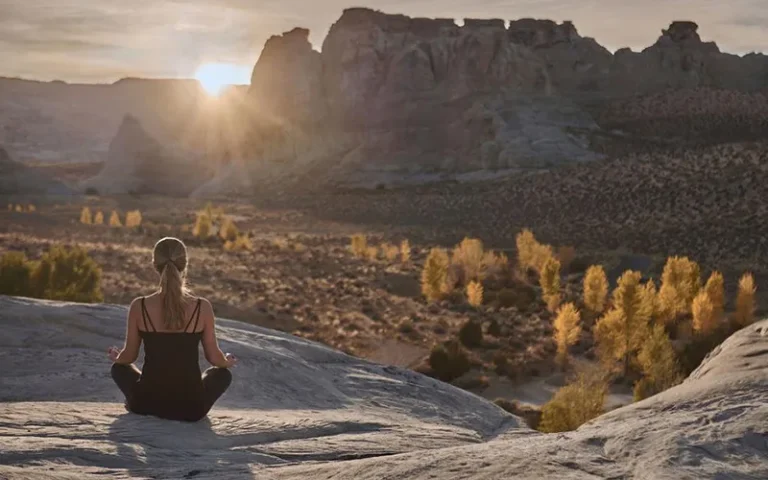
Oversimplification risks in this space often manifest as “Biome Blindness.” Organizers and participants frequently fail to account for the specific psychological impact of different landscapes. For example, a “Forest Bathing” retreat in the humid Appalachians provides a “Closed Prospect”—a sense of enclosure and safety—which is ideal for those suffering from anxiety or sensory overload. In contrast, a retreat in the vast “Open Prospect” of the Utah desert is better suited for individuals seeking a perspective shift or a creative “unblocking.” The “best” retreat is not a universal constant; it is a clinical match between the individual’s current state and the biome’s specific sensory signals.
Furthermore, we must address the “Digital Paradox.” Many modern retreats claim to offer a “digital detox” while providing high-speed Wi-Fi and “Instagrammable” moments. A high-fidelity nature retreat recognizes that the smartphone is a “Cognitive Tether.” True immersion requires the systematic severing of this tether. The failure to do so results in a “Split Presence,” where the body is in the wilderness, but the mind remains in the social-digital stream, negating the neurological benefits of the immersion.
The Systemic Evolution of the American Wilderness Experience
The American relationship with nature retreats has evolved through four distinct systemic phases. The first, the “Sublime Era” (19th Century), viewed nature through the lens of Romanticism—places like Yellowstone and Yosemite were cathedrals for the soul. The second, the “Utilitarian Era” (early 20th Century), saw the rise of the National Park Service and the concept of nature as a “Physical Playground” for hiking and camping.
The third phase, the “Wellness Era” (1970s-2010s), integrated Eastern contemplative practices with Western environmentalism, giving birth to the first “Retreat Centers” like Esalen and Omega. We are now in the fourth phase: the “Regenerative Longevity Era” (2020s). In this current paradigm, the best nature retreats in the United States are no longer just places to “get away”; they are sites of “Precision Ecology.” This involves the use of biometrics to measure the impact of nature on human longevity, the use of indigenous land stewardship models to restore the local ecosystem, and the design of living spaces that utilize “Biophilic Analogues” to maintain the nature-connection indoors.
Conceptual Frameworks for Biome-Based Restoration
1. The “Prospect-Refuge” Theory
This environmental psychology framework suggests that humans feel most “at ease” in environments that offer both a wide view (prospect) to monitor for threats and a safe place to hide (refuge).
-
Application: A lodge overlooking a valley from the edge of a forest (e.g., the Blue Ridge Mountains) is more psychologically restorative than a lodge in the middle of a dense, sightline-less thicket.
2. The “Phytoncide” Metabolic Model
Phytoncides are antimicrobial volatile organic compounds emitted by trees (particularly conifers).
-
Mechanism: Inhaling these compounds during “Forest Bathing” has been proven to increase the activity of “Natural Killer” (NK) cells in the human immune system.
-
Limit: This effect is highest in mature, undisturbed forests and significantly lower in urban parks or replanted monocultures.
3. The “Chronobiological Entrainment” Framework
This model treats the nature retreat as a tool for resetting the circadian clock.
-
Mechanism: Exposure to high-intensity natural blue light in the morning and the absence of artificial light at night “entrains” the body’s master clock (the SCN).
-
Factor: The best nature retreats in the United States utilize “Dark Sky” protocols to ensure that the guest’s pineal gland is not suppressed by light pollution.
Taxonomy of Retreat Variations and Ecological Trade-offs
| Retreat Category | Exemplar Region | Primary Restoration Signal | Ecological Trade-off |
| High Alpine Lodges | Rocky Mountains, CO | “Awe” & Cryotherapy (cold) | Risk of Altitude Sickness/Fatigue |
| Coastal Sanctuaries | Big Sur, CA / Maine | Negative Ions; “Blue Mind” | High humidity; Corrosive environment |
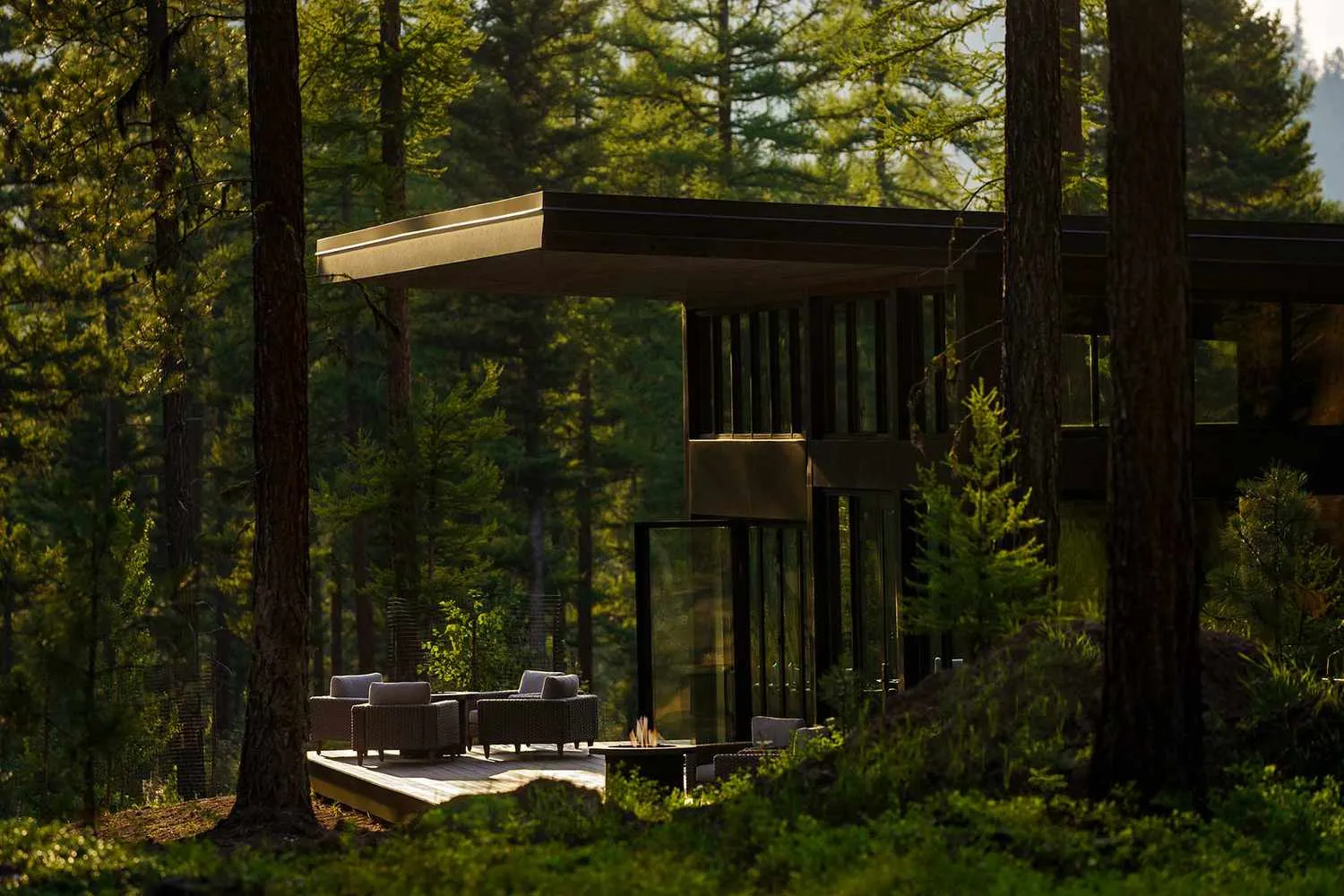
| Old-Growth Forests | Pacific NW / Smoky Mts | Phytoncides; “Soft Fascination” | Low Vitamin D (shaded); Dampness |
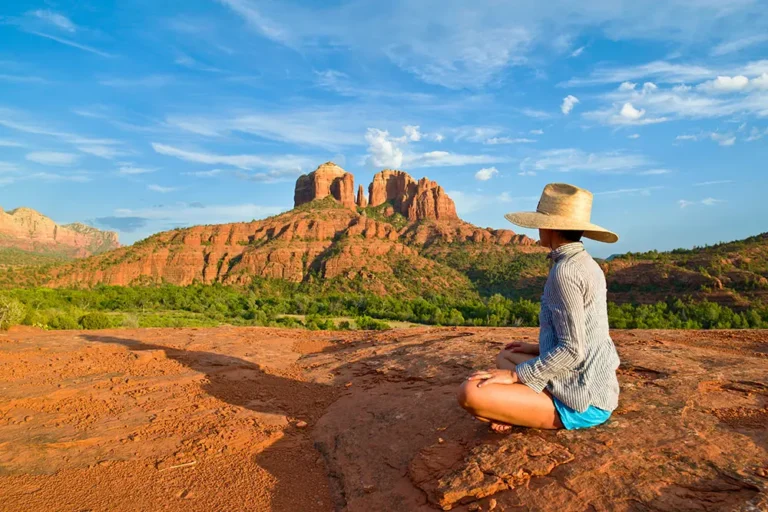
| Desert Silence Lodges | Sedona, AZ / Moab, UT | Visual vastness; Silence | Dehydration; Heat Stress |
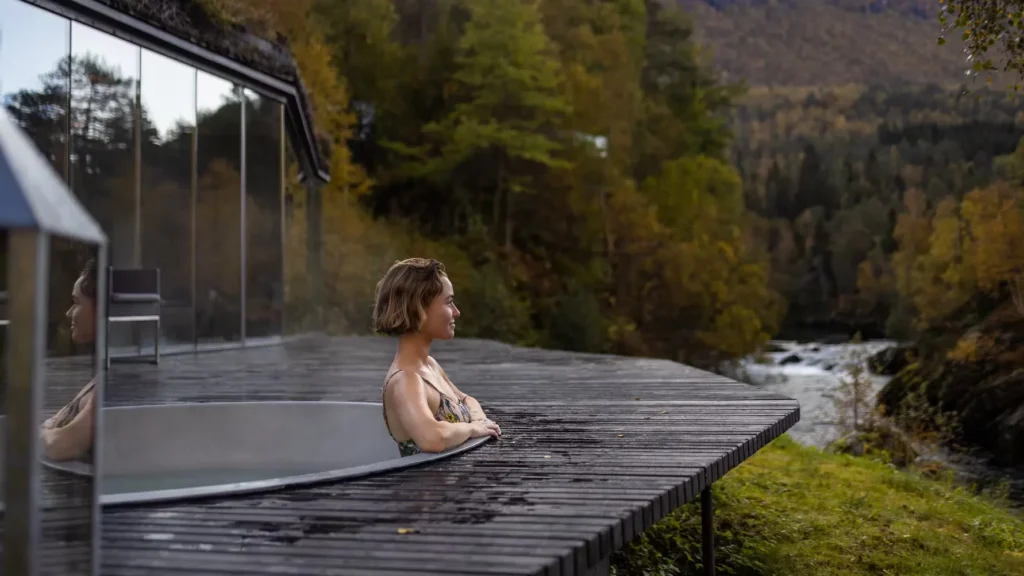
| Thermal/Geothermal | Hot Springs, AR / Idaho | Mineral absorption; Heat shock | Sulfur odor; Potential overcrowding |
| Riverine/Estuary | Everglades / Outer Banks | Biological diversity; Flow | Insect load: Changing tides |
Realistic Decision Logic: The “Ecological Load” vs. “Capacity”
When selecting a retreat, one must evaluate their current “Ecological Capacity”—their ability to handle the physical demands of the biome. A person in acute burnout should avoid a High Alpine retreat (high physiological load) and instead opt for a Coastal or Forest retreat where the environment provides more “Supportive Refuge.”
Detailed Real-World Immersion Scenarios
Scenario 1: The “Neuro-Fatigued” Knowledge Worker
-
Location: A “Dark Sky” cabin in the Texas Hill Country or the Mojave Desert.
-
The Goal: Resettling the circadian rhythm and eliminating “Attention Residue.”
-
Strategy: Absolute digital severance and a focus on “Celestial Gazing.”
-
Failure Mode: “Agoraphobia” or the stress of the vast silence, which can trigger deep-seated anxieties in those accustomed to urban noise.
Scenario 2: The “Immune-Depleted” Urbanite
-
Location: An old-growth hemlock forest in Washington state or Western North Carolina.
-
The Goal: Boosting NK cell activity and lowering cortisol.
-
Strategy: “Slow-Walking” (Shinrin-yoku) for 4 hours a day with focused sensory engagement.
-
Second-Order Effect: The high humidity and fungal diversity of the forest can lead to a “Herxheimer” (detox) reaction in sensitive individuals.
Economic and Resource Dynamics of Nature Access
The “Price of Silence” in America is subject to extreme variability based on the “Exclusivity of the Commons.”
| Access Level | Price / Night (USD) | Primary Resource | Hidden Costs |
| Public Land DIY | $20 – $50 | Raw Wilderness | Gear, Permit labor, Risk management |
| Boutique Eco-Retreat | $350 – $800 | Expert-led programming | Travel “Last Mile” logistics |
| Ultra-Luxe Ranch | $1,500 – $3,500 | 1:1 Nature Guide; High privacy | Tip culture; Private aviation costs |
The Opportunity Cost of Proximity: Many of the best nature retreats in the United States are located in “Last Mile” destinations—areas requiring significant travel time from major hubs. The cost of a 3-day retreat may include 2 full days of travel. A sophisticated planner evaluates the “Restoration-to-Travel” ratio. If the travel stress exceeds the restoration benefit, the retreat is economically and biologically inefficient.
Support Systems, Diagnostic Tools, and Integration
To ensure that the benefits of the retreat are not lost upon re-entry, the best facilities now offer “Somatic Scaffolding”:
-
HRV Monitoring: Using Oura or Whoop data to track the “down-regulation” of the nervous system in real-time.
-
Soundscape Audio-Recording: Recording the actual sounds of the retreat environment for use as a “Neuro-anchor” when back in the city.
-
Local Foraging/Botany Kits: Tools to engage the mind in “Taxonomic Interest,” which is a form of Soft Fascination.
-
Circadian-Aligned Lighting: Ensuring the indoor spaces of the retreat use red-shifted light after sunset.
-
Indigenous Land-Education: Providing context on the history of the land to foster a sense of “Place-based Belonging.”
-
“Leave-No-Trace” Certification: Training the guest in the ethics of the wild to turn them from a consumer into a steward.
-
Post-Retreat Integration Calls: 15-minute sessions to help the guest “Bridge the Wild” into their daily routine.
Risk Landscape: Identifying “Nature-Washing”
As the demand for nature immersion grows, “Nature-Washing” (the wellness equivalent of Greenwashing) has become a systemic risk.
-
The “Manicured Wild”: Resorts that claim to be “in nature” but have destroyed the local biodiversity to create golf courses or lawn-heavy landscapes. These lack the phytoncide and microbiome density required for health.
-
The “Aesthetic Trap”: Focusing on the “view” from the window while the indoor air quality is poor or the building materials are synthetic.
-
The “Crowd Effect”: “Best” lists often drive so much traffic to a location that the silence is lost. A retreat in a “famous” park may be less restorative than one in a “generic” state forest.
-
Inadequate Safety Infrastructure: A retreat that puts guests in deep wilderness without adequate medical support or communication (for emergencies) can lead to “Survival Panic,” which negates all wellness benefits.
Governance, Long-Term Adaptation, and Maintenance
A nature retreat should be viewed as a “Systemic Reset” that requires periodic maintenance.
-
The 90-Day “Wildness Booster”: Research suggests that the psychological benefits of a major retreat begin to decay after 3 months. Scheduling a “Micro-immersion” (4 hours in a local forest) every weekend is the “maintenance dose.”
-
The “Senses Review”: Periodically checking one’s ability to “hear” the world. If urban noise has become transparent, it’s a sign that the brain’s “Directed Attention” is over-taxed.
-
Adaptation Triggers: If a participant finds that they “cannot sit still” in a forest for 20 minutes without reaching for their phone, this is a signal for an immediate, high-intensity retreat intervention.
Measurement, Tracking, and Evaluation of Success
Evaluation must be both quantitative and qualitative.
-
Leading Indicator: “The Sensory Window.” How many different bird calls or plant species can the participant identify by Day 3? This measures the expansion of “Soft Fascination.”
-
Quantitative Signal: Resting Heart Rate (RHR). A sustained drop of 3-5 BPM over a 5-day retreat is a strong signal of cardiovascular de-stressing.
-
Qualitative Signal: “The Re-entry Dividend.” How many days after the retreat does it take for the “City Frustration” to return?
-
Documentation Example: Keeping a “Gratitude of Awe” journal during the stay to anchor the feeling of “Perspective Shift.”
Common Misconceptions and Oversimplifications
-
Myth: “You need to be active (hiking/climbing) to get the most out of it.”
-
Correction: “Soft Fascination” occurs most effectively when the body is at rest or moving slowly. High-intensity exercise can keep the mind in a “Performance” state.
-
Myth: “Glamping is just camping for lazy people.”
-
Correction: High-quality glamping is a strategic tool for “Reducing the Friction of Entry,” allowing those with low ecological capacity to access the wild safely.
-
Myth: “The more remote the better.”
-
Correction: A 40-acre “pocket forest” with high biodiversity can be more restorative than a 10,000-acre desert plateau if the guest’s primary need is “Refuge.”
-
Myth: “Nature is always healing.”
-
Correction: Nature is indifferent. It is the human interaction with nature—the way we manage our attention and our expectations—that is healing.
Ethical, Practical, or Contextual Considerations
The expansion of nature retreats in the United States must be balanced against “Overtourism” and “Gentrification of the Wild.” Many of the best nature retreats in the United States are situated in areas where local communities struggle with housing costs and resource depletion. A socially responsible seeker should look for retreats that operate under a “Regenerative Tourism” model—those that hire locally, support land trusts, and actively participate in the restoration of the biome. Practically, one must also account for the “Climate Risk” of 2026; wildfire seasons in the West and hurricane seasons in the East now dictate the “Safe Windows” for immersion.
Conclusion
The evolution of the American nature retreat reflects a broader shift in human consciousness: the recognition that we are not separate from the biosphere, but embedded within it. The best nature retreats in the United States are those that do not merely “provide a view,” but facilitate a radical return to the somatic and psychological rhythms of the earth. By utilizing the conceptual frameworks of environmental psychology, being mindful of the “Ecological Load” of various biomes, and ruthlessly protecting the cognitive sanctuary from digital intrusion, the modern seeker can achieve a level of restoration that is both deep and durable. The ultimate success of a retreat is not measured by the beauty of the landscape left behind, but by the clarity and resilience of the mind brought back into the world.