Spiritual Healing Destinations USA: The Definitive 2026 Guide
The quest for spiritual restoration in the United States has undergone a profound structural shift. In 2026, the landscape of “spiritual healing” has matured past the simplistic dichotomies of the New Age era—no longer a choice between rigid religious dogma and nebulous “vibes.” Instead, it has evolved into a sophisticated, multi-disciplinary field where ancient wisdom, ecological psychology, and modern neurobiology converge. Today’s seeker is not merely looking for a respite from stress but for a systematic recalibration of meaning, purpose, and biological rhythm.
This evolution mirrors a broader societal recognition that spiritual health is a vital component of human longevity and cognitive resilience. As our daily lives become increasingly mediated by digital interfaces and algorithmic governance, the physical “destination” becomes the essential catalyst for real-world presence. These centers serve as rare, low-signal environments where the individual can decouple from the chronic hyper-arousal of modern existence and re-engage with the deeper strata of the self.
However, the proliferation of “wellness tourism” has created a market filled with superficial offerings. Identifying a true sanctuary requires a rigorous analytical framework. A legitimate destination for spiritual work is defined by its “atmospheric integrity”—the coherence between its philosophical lineage, its environmental stewardship, and its clinical safety protocols. This flagship inquiry serves as the definitive reference for navigating the highest echelons of spiritual healing in the USA, providing the deep contextual understanding necessary for transformative engagement.
Understanding “Spiritual Healing Destinations USA”
To define spiritual healing destinations usa, one must look beyond the marketing aesthetics of desert sunsets and minimalist architecture. In the current paradigm, spiritual healing is understood as the restoration of “ontological security”—the deep-seated sense of one’s place in the order of existence. A true healing destination acts as a “sacred container,” a specifically managed environment where the external noise is lowered so that the internal signal can be clarified.
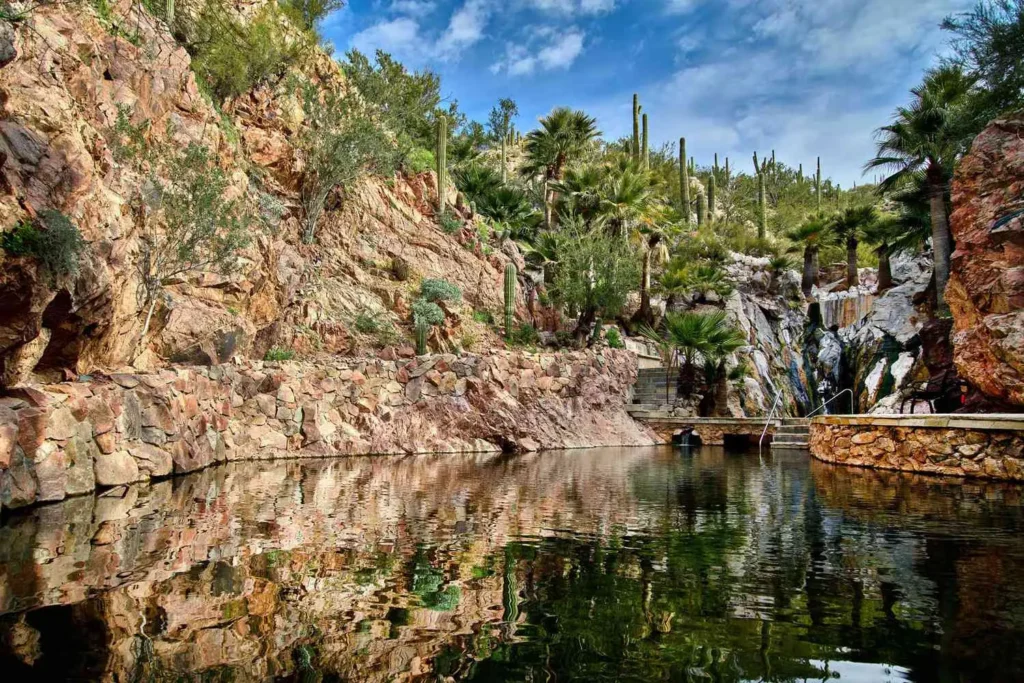
A common misunderstanding is that these destinations are essentially specialized spas. While a spa focuses on the aesthetic and sensory comfort of the body, a spiritual healing destination focuses on the structural and existential integrity of the consciousness. The “luxury” here is not found in the thread count of the sheets, but in the density of the silence and the pedigree of the facilitators. Whether it is a Buddhist monastery in the Catskills or an interfaith haven in the Rockies, the efficacy of the site is measured by its ability to facilitate a “second-order” change—a change in the way the participant perceives their reality.
The oversimplification risk in this field is high, particularly with the commercialization of “vortexes” and “energy sites.” A location may possess natural beauty or historical significance, but without a coherent practice framework—a “technology of the spirit”—it remains a tourist site rather than a healing destination. Discerning practitioners look for sites that provide an integrated experience: the geological co-regulation of the landscape, the nutritional grounding of the cuisine, and the intellectual scaffolding of the teachings.
The Contextual Evolution: From Divine Healing to Modern Sanctuaries
The history of spiritual healing in America is a story of shifting the locus of power from the institution to the individual. In the 19th century, spiritual healing was often synonymous with the “Divine Healing” movement, rooted in the belief that the body’s health was a direct reflection of one’s relationship with God. This period saw the rise of New Thought and Christian Science, which introduced the revolutionary idea that the mind itself could act as a therapeutic agent.
By the mid-20th century, the focus expanded to include Eastern philosophies, as returning seekers brought back traditions of meditation and somatic awareness from India and Tibet. This “Western Veda” era catalyzed the establishment of flagship centers like the Esalen Institute in Big Sur (1962), which pioneered the integration of psychology and spirituality. In 2026, we have reached the “Integrative Era.” Modern destinations like Sensei Lanai or Dharmakaya now utilize data-driven insights—such as Heart Rate Variability (HRV) and sleep architecture—to validate the efficacy of ancient contemplative practices.
Conceptual Frameworks: Mental Models for Evaluating Spiritual Sites
1. The “Geological Co-Regulation” Model
This framework posits that human physiology is not separate from the terrain it occupies. Spiritual healing is often the result of the body synchronizing its rhythms with the low-frequency stability of the Earth.
-
Application: Evaluating a site based on its mineral composition (e.g., the iron-rich red rocks of Sedona) or its atmospheric negative ion density (e.g., coastal Big Sur).
-
Limit: Geological beauty cannot compensate for poor facilitation or unsafe group dynamics.
2. The FICA Assessment Model
Borrowed from clinical spiritual care, this model evaluates a destination’s suitability based on Faith/Belief, Importance/Influence, Community, and Action.
-
Critical Inquiry: Does the destination provide a community (Sangha) that persists after the visit, or is it a purely transactional “one-off” event?
3. The “Signal-to-Noise” Ratio
In the digital age, silence is the ultimate status symbol. This model ranks destinations by their “Digital Sequestration” capability. A site that requires a total disconnection from personal devices provides a deeper “reset” of the Default Mode Network than one that offers high-speed Wi-Fi.
Key Categories of Spiritual Destinations in America
The American landscape is broadly segmented into different “Healing Modalities,” each offering a distinct trade-off between clinical structure and intuitive exploration.
| Category | Primary Mechanism | Best Examples | Trade-off |
| The Energy Vortex | Geological Resonance | Sedona (AZ), Mount Shasta (CA) | Can be “touristy”; requires self-led practice |
| The Monastic Secular | Silence & Lineage | Dharmakaya (NY), IMS (MA) | Highly structured; limited personal freedom |
| The Indigenous Sacred | Traditional Rite of Passage | Taos Pueblo (NM), Vision Quests | Requires cultural sensitivity/permission |
| The Bio-Hacker Retreat | Science-Spirit Synthesis | Sensei (HI), Canyon Ranch (AZ) | High cost; can feel overly clinical |
| The Interfaith Haven | Pluralistic Contemplation | Crestone (CO), Osage Forest (OK) | Less focus on a specific “deep” lineage |
| The Wilderness Cathedral | Ecological Immersion | Big Sur (CA), Joshua Tree (CA) | Remote; requires physical resilience |
Realistic Decision Logic
If the seeker is suffering from Cognitive Overload, the “Monastic Secular” category is superior. If the goal is Existential Re-orientation, the “Energy Vortex” or “Wilderness Cathedral” provides a broader canvas for the imagination.
Detailed Real-World Scenarios and Decision Logic
Scenario 1: The “High-Beta” Executive Burnout
-
Profile: An individual with chronic sympathetic nervous system arousal, unable to quiet the mind through standard meditation.
-
The Destination: Art of Living Retreat Center (NC) or Dharmakaya (NY).
-
Mechanism: Focus on Pranayama (breathwork) and specific Ayurvedic rituals to “ground” the nervous energy before attempting silence.
-
Failure Mode: Selecting a purely silent retreat immediately; the “silent noise” of an overactive brain can lead to increased anxiety without a physical “off-ramp.“
Scenario 2: The “Grief and Loss” Recalibration
-
Profile: Seeking a way to process significant life transitions.
-
The Destination: Esalen Institute (CA) or Menla (NY).
-
Decision Point: Choosing a center that offers “facilitated processing”—group or individual sessions that integrate the spiritual experience with psychological safety.
-
Second-Order Effect: The landscape itself (the ocean or mountains) acts as a “Witness,” providing a sense of scale that reduces the acute intensity of personal suffering.
Economic and Resource Dynamics: The Anatomy of Premium Healing
Spiritual healing in the US is priced as a “high-consideration investment.” Understanding the cost drivers helps the seeker distinguish between a profit-driven resort and a mission-driven sanctuary.
Weekly Cost Projections for 2026
| Tier | Avg. Weekly Cost | Resource Focus | Infrastructure |
| Scholarship/Sliding Scale | $500 – $1,200 | Lineage preservation | Shared rooms; communal chores |
| Mid-Tier Specialty | $2,500 – $4,500 | Expert facilitation; Organic diet | Private rooms; curated environment |
| Premium Integrative | $6,000 – $12,000+ | Medical/Spiritual hybrid | Luxury villas; 1:1 specialist access |
Direct Costs vs. Opportunity Cost: The primary expense is often not the tuition, but the “time-cost.” A 10-day silent retreat at a top-tier destination represents approximately 80 hours of potential professional output. Therefore, the “yield” of the retreat must be high enough to justify this “retooling” of the self.
Support Systems, Tools, and Safety Protocols
The spiritual healing destinations uUSAthat command the most respect in 2026 are those that have professionalized their “Duty of Care.“
-
Trauma-Informed Staff: Essential for managing the “Spiritual Emergency” (sudden ego-dissolution or resurfacing of trauma).
-
Sattvic/Grounding Nutrition: High-vibration diets that support the neurological shifts occurring during deep practice.
-
The “Pre-Arrival Taper”: Protocols provided 30 days out to reduce caffeine, sugar, and digital intake, preventing a “crash” upon arrival.
-
Integration Liaisons: Post-retreat support systems that help translate “peak experiences” into “abiding traits.“
-
Emergency Medical Access: Especially critical for remote “Wilderness Cathedrals.“
Risk Landscape and Failure Modes
Spiritual work is not without its “shadow side.” Practitioners must be aware of compounding risks:
-
The “Spiritual Bypassing” Trap: Using a destination’s “energy” to avoid dealing with underlying psychological or medical pathologies.
-
The “Vortex Delusion”: Attributing all healing to a location’s “energy” while ignoring the necessity of internal effort.
-
Lineage Fragility: The risk of a center’s reputation being tied to a single “charismatic leader” without institutional oversight.
-
Cultural Appropriation: Destinations that commodify Indigenous practices without proper lineage permission or economic reciprocity.
Governance, Maintenance, and Long-Term Adaptation
The value of spiritual healing destinations USA is realized in the “After-Life” of the visit. This requires a personal “Governance Plan.“
The 30-60-90 Integration Checklist:
-
Day 1-30: Focus on “Sensory Preservation.” Limit news intake; maintain the “retreat rhythm” for 15 minutes each morning.
-
Day 31-60: Identify the “State-to-Trait” shift. What specific behaviors have changed (e.g., lower reactivity in traffic)?
-
Day 61-90: Evaluate the need for a “Top-up” or a deeper immersion. Spiritual health requires “Periodic Maintenance,” much like physical health.
Measurement, Tracking, and Evaluation
How do we quantify the “spiritual”? In 2026, we use a hybrid of qualitative signals and bio-data.
-
Quantitative (Leading): HRV Recovery. A sustained increase in the “variability” between heartbeats indicates a nervous system that has successfully moved from “Survival” to “Recovery” mode.
-
Qualitative (Lagging): The “Annoyance Threshold.” Tracking how many minutes pass during a high-stress event before the “fight-or-flight” response is triggered.
-
Documentation: Keeping a “Contemplative Log” that tracks not feelings, but patterns of perception.
Common Misconceptions and Oversimplifications
-
Myth: “You need to be religious to visit these sites.“
-
Correction: Most top US destinations are “post-denominational” or secular-pluralistic, focusing on the mechanics of the mind rather than theology.
-
Myth: “Sedona’s energy will heal me automatically.“
-
Correction: Geography is a catalyst, not a cure. The landscape provides the space, but the participant must provide the practice.
-
Myth: “Retreats are just for the wealthy.”
-
Correction: Many of the most rigorous lineage-based centers (like IMS or Sivananda) offer sliding scales or work-exchange programs.
Conclusion
A spiritual healing destination is more than a place; it is a “temporal architecture”—a period of time structured specifically to allow the human spirit to catch up with the body. In the American context of 2026, these destinations represent the frontier of a new public health movement: the democratization of inner peace. Selecting the right destination is an act of “existential due diligence.” It requires the seeker to match their specific internal friction with the appropriate external sanctuary. Ultimately, the success of a spiritual journey is not measured by the beauty of the destination, but by the clarity and compassion the traveler carries back into the world.