Best Yoga Retreats United States: A Definitive 2026 Somatic Guide
The contemporary yoga retreat in the United States has moved beyond its origins as a secondary amenity within the broader hospitality sector. In 2026, the elite tier of these immersions functions as a sophisticated intersection of somatic education, neurobiological regulation, and ecological stewardship. No longer confined to the “studio-plus-lodging” model, the most significant domestic offerings now prioritize “kinesthetic integrity”—the precise alignment of physical movement with the body’s internal physiological state. This shift reflects a deepening cultural understanding that yoga is not merely a sequence of postures but a systematic methodology for navigating the modern stress landscape.
For the discerning practitioner, the selection of a retreat involves a rigorous audit of a facility’s “pedagogical lineage.” As yoga has proliferated across the American consciousness, the market has fragmented into specialized niches ranging from high-intensity Vinyasa “power camps” in the Rocky Mountains to silent, restorative Yin immersions in the coastal forests of the Pacific Northwest. This fragmentation necessitates a more analytical approach to selection, moving past aesthetic appeal toward a measurable “restorative yield.” A true flagship retreat now provides a controlled environment where the variables of light, nutrition, and social density are all engineered to support the central somatic objective.
However, the rapid growth of this sector has introduced a “signal-to-noise” challenge. The ubiquity of the term “yoga retreat” often masks a wide variance in instructor expertise and facility infrastructure. Discerning the best yoga retreats in the United States requires a framework that accounts for the “Expert-to-Guest” density and the coherence of the curriculum. In this era of high-performance wellness, a retreat is increasingly viewed as an “operating system update” for the human body—a chance to re-pattern the nervous system and integrate habits that persist long after the participant leaves the mat.
Understanding “Best Yoga Retreats United States”
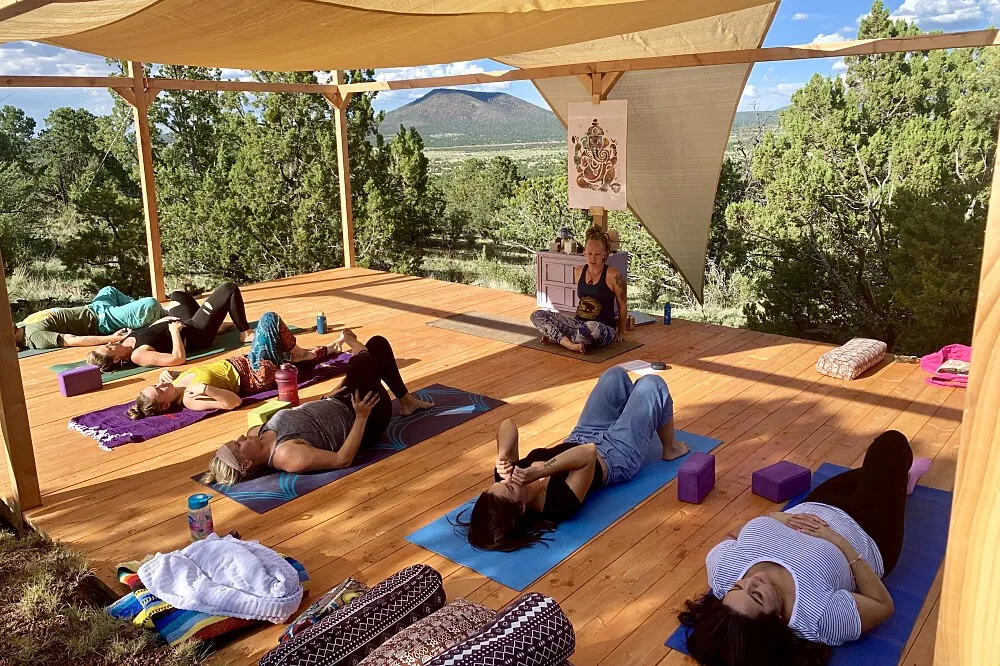
To define the best yoga retreats in the United States, one must look beyond the standard hospitality metrics of room service and thread count. A high-fidelity yoga retreat is an “ecological container” designed to facilitate a state of Pratyahara (withdrawal of the senses) while simultaneously heightening Dharana (concentration). The effectiveness of these retreats is indexed to their ability to minimize “leisure friction”—those unnecessary choices and social expectations that consume the cognitive bandwidth required for deep practice.
A common misunderstanding is the belief that a retreat is simply a “yoga holiday.” While a holiday prioritizes sensory pleasure and escape, a retreat prioritizes sensory regulation and confrontation with one’s own physical and mental patterns. The “best” facilities in America—such as the Esalen Institute in Big Sur or Sewall House in Maine—are characterized by their commitment to “Functional Sequestration,” where the guest is gently removed from their digital and social loops to allow for the reorganization of the autonomic nervous system.
Oversimplification in this market often occurs when practitioners choose based on the “Yoga Style” alone. While a center might list “Vinyasa” or “Hatha,” the experience is dictated by the Instructor-to-Student ratio and the Environmental Coherence. For example, a high-heat Bikram practice in the humid environment of Florida provides a fundamentally different metabolic stimulus than the same sequence practiced in the dry, high-altitude air of Arizona. The best retreats understand these geographic nuances and integrate them into the curriculum.
The Contextual Evolution: From Counterculture to Clinical Precision
The American yoga retreat has traveled a long arc from the fringe to the mainstream. The 1960s and 70s saw the establishment of “intentional communities” like Kripalu and The Expanding Light, which were essentially spiritual experiments. These early centers were rooted in the Ashram model—communal, often austere, and deeply philosophical. By the 1990s, the “Yoga Journal Era” shifted the focus toward a more athletic, individualized practice, giving rise to the destination spa hybrid where yoga was treated as a premium fitness class.
In 2026, we are witnessing the “Third Wave”: the Bio-Somatic Sanctuary. This model integrates ancient Sanskrit lineages with modern physiology and neuroscience. Contemporary retreats are no longer just teaching “poses”; they are utilizing yoga as a tool for “neuro-integration.” This evolution has been fueled by a growing body of clinical research supporting yoga as a valid intervention for trauma recovery, metabolic health, and cognitive longevity. Consequently, the best retreats are now more likely to feature an on-site physiologist than a gift shop.
Conceptual Frameworks for Evaluating Somatic Quality
1. The “Kinetic Capacity” Model
This framework evaluates a retreat based on its ability to meet a student at their current “functional baseline.” A luxury retreat does not offer the hardest class, but one that offers the most precise modifications. The “best” centers employ teachers who can interpret a student’s musculoskeletal “stiction” and adjust the protocol accordingly.
2. The Biophilic Synchronization Framework
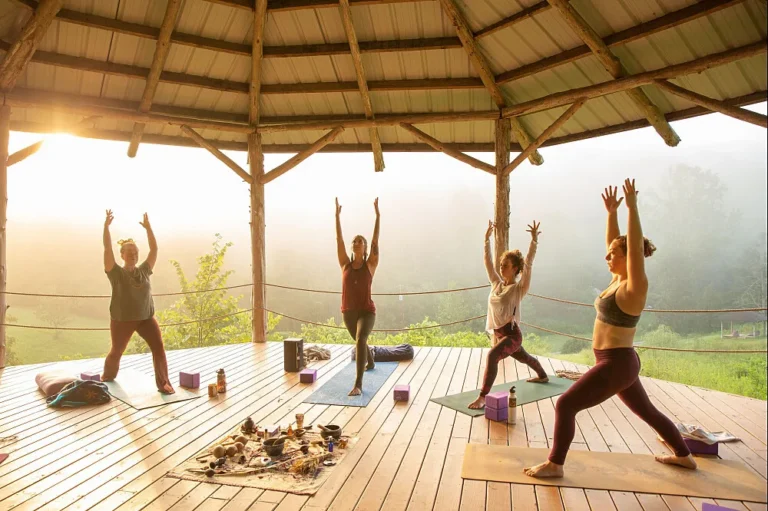
Yoga is an attempt to synchronize the body’s internal rhythms (breath, heart rate) with external environmental rhythms. This model ranks retreats based on their “Open-Air Integrity”—the amount of time practice is spent in natural light and unfiltered air. Facilities like Feathered Pipe Ranch in Montana or Ratna Ling in California excel here by utilizing nature as a primary co-teacher.
3. The “Dopamine-to-Serotonin” Shift
A high-quality retreat is designed to move the brain from a “Dopamine-driven” state (seeking, achieving, digital scrolling) to a “Serotonin-driven” state (contentment, presence, regulation). If a retreat schedule is too packed with activities, it risks keeping the guest in a “performance” mode, thereby failing this psychological metric.
-
Limit: This framework requires a minimum stay of at least 4 nights to be effective, as the initial neurochemical transition takes roughly 48 to 72 hours.
Taxonomy of the American Yoga Landscape
The domestic market is now segmented by “Intentional Outcomes.” Each category offers a specific trade-off between physical output and mental stillness.
| Category | Primary Focus | Notable Example | Trade-off |
| Boutique Historic | Lineage & Personalization | Sewall House (ME) | Limited amenities; smaller groups |
| Wilderness Immersion | Ecological Connection | Esalen (CA) | Rustic infrastructure; variable weather |
| Clinical Longevity | Bio-optimization & Diagnostics | Canyon Ranch (AZ) | High cost; less traditional spiritual focus |
| Traditional Ashram | Service & Philosophy | Sivananda Ranch (NY) | Austere; communal living; early starts |
| Luxury Integrated | Sensory Comfort & Design | Lake Austin Spa (TX) | Higher “leisure friction”; less intensity |
| Boutique Specialized | Specific Styles (e.g. Yin/SUP) | Float & Flow (CO) | Niche focus: requires a specific interest |
Decision Logic: The “Practitioner’s Audit”
When selecting from the best yoga retreats in the United States, the practitioner should ask: “Is the teacher a permanent part of this facility’s ecosystem, or a guest instructor?” Permanent staff (as seen at Art of Living in NC) tend to offer a more stable and integrated “Safety Container” than rotating guest teachers who may be unfamiliar with the facility’s unique energy.
Detailed Real-World Scenarios and Decision Logic
Scenario A: The “Chronic Compression” (The Urban Executive)
-
The Goal: Decompressing the lumbar spine and the sympathetic nervous system after months of 14-hour days.
-
The Choice: A Restorative/Yin focus at a center like Miraval, Arizona.
-
Decision Point: Opting for “Prop-intensive” sessions over “Flow” classes.
-
Failure Mode: Trying to “conquer” an advanced Vinyasa class, which simply adds more cortisol to an already overloaded system.
Scenario B: The “Spiritual Sabbatical”
-
The Goal: Deepening the understanding of yoga philosophy (the Yoga Sutras) beyond the physical.
-
The Choice: The Expanding Light (CA) or Dharmakaya (NY).
-
Constraint: These centers often require attendance at morning and evening lectures/meditations.
-
Second-Order Effect: The physical practice becomes secondary to the “Mental Yoga” of sustained silence and study.
Economic and Resource Dynamics: The Value of Presence
The cost of an elite yoga retreat is often misinterpreted as “paying for a hotel room.” In reality, the price is an investment in Human Capital and Atmospheric Integrity.
| Tier | Price Range (Weekly) | Resource Allocation | Outcome Expectation |
| High-End Boutique | $4,500 – $8,000 | 1:2 Staff ratio; Private villas | Total restoration; personalized path |
| Destination Centers | $2,000 – $4,000 | World-class curriculum; Organic food | Skill advancement; habit reset |
| Ashram/Non-Profit | $800 – $1,500 | Shared spaces; “Seva” (selfless service) | Ego-reduction; spiritual depth |
| Specialist Pop-up | $1,200 – $2,500 | Expert guest teacher; Variable venue | Intensit:; community networking |
Indirect Costs and Opportunity Cost
The true cost of a 10-day retreat is the Pre-arrival Taper and the Post-departure Integration. A practitioner who returns to work 4 hours after landing will lose approximately 80% of the retreat’s neurological benefits within the first week.
Support Systems, Tools, and Integrative Strategies
-
The “Sattvic” Nutritional Protocol: The best yoga retreats in the United States serve Sattvic food—clean, seasonal, and easy to digest—to ensure the body’s energy is available for practice rather than digestion.
-
Prop-Architecture: A hallmark of quality is the quality of the “props” (blocks, straps, bolsters). Precision in Iyengar-style retreats requires specialized equipment that is often missing from general resorts.
-
Digital Sequestration: The most effective retreats offer (or require) a “phone check” at the beginning of the stay.
-
1-on-1 “Sadhana” Consultation: A high-tier offering where a teacher helps you design a “Home Practice” that fits your unique anatomy and schedule.
The Risk Landscape: Identifying Quality Erosion
As “wellness” becomes a major driver of tourism, many facilities are “Yoga-Washing” their offerings.
-
The “Fitness-First” Trap: A retreat that treats yoga as “gymnastics in a nice location.” This lacks the breathwork (Pranayama) and meditation necessary for systemic change.
-
The Social Friction Risk: Larger retreats can become networking mixers, which prevents the introspective silence required for genuine somatic work.
-
Inadequate Instructor Vetting: Always check the Yoga Alliance or lineage-specific certifications of the lead teacher. A 200-hour certificate is a minimum; a retreat leader should ideally have 500+ hours and years of teaching experience.
Governance, Maintenance, and Post-Retreat Adaptation
The retreat is the “seed,” but the home practice is the “soil.” A successful experience requires a Governance Plan for the return to daily life.
-
The 72-Hour Re-entry Rule: No major life decisions or high-stress meetings for the first 3 days after returning.
-
The “Anchor Pose” Strategy: Selecting one sequence or pose from the retreat to practice every morning for 15 minutes to “anchor” the retreat state into daily life.
-
Periodic “Micro-Retreats”: Scheduling a 4-hour silent block at a local studio every month to maintain the “Somatic Memory.”
Measurement, Tracking, and Evaluation of Progress
Success in yoga is often subtle, but in 2026, it can be tracked through both qualitative and quantitative lenses.
-
Leading Indicator: Improved “Thoracic Expansion” (breath capacity). Are you breathing into the bottom of the lungs by Day 4?
-
Quantitative Signal: HRV (Heart Rate Variability) synchronization with breath. Modern wearables can track how effectively your “Yoga Breath” is triggering your vagus nerve.
-
Documentation Example: Keeping a “Somatic Journal” during the retreat to record “Physical Breakthroughs” (e.g., a release in the hip flexors) and their corresponding “Emotional Releases.”
Common Misconceptions and Oversimplifications
-
Myth: “I need to be flexible to go to a yoga retreat.”
-
Correction: Flexibility is the outcome, not the prerequisite. The best retreats are for the “stiff” and the “un-flexible.”
-
Myth: “Hot yoga is better for detoxing.”
-
Correction: Extreme heat can actually stress the adrenal glands. Some of the most profound “detox” happens in cool, quiet, restorative environments.
-
Myth: “All retreats are basically the same.”
-
Correction: A Zen-Yoga retreat is fundamentally different in neuro-impact from a Kundalini retreat. One is about “stilling,” the other is about “arousing.”
Conclusion
The pursuit of the best yoga retreats in the United States is ultimately a pursuit of self-knowledge. In a world characterized by increasing fragmentation and sensory overload, the yoga retreat stands as a vital architecture for human re-assembly. As we navigate the complexities of 2026, the standard for a “top” retreat has moved past luxury and into the realm of somatic integrity. Whether nestled in the Maine woods or perched on a Big Sur cliffside, these sanctuaries offer more than just a temporary escape; they offer the tools to build a body and mind that can inhabit the world with grace, resilience, and a profound sense of presence.