Best Coastal Retreats United States: A 2026 Editorial Strategy Guide
The American coastline, spanning over 95,000 miles of diverse ecological and cultural terrain, has long served as a primary conduit for restorative travel. Yet, the concept of a “retreat” has undergone a profound transformation in the early 21st century. No longer merely a synonym for a beachfront vacation, the modern immersion is a calculated intervention designed to leverage the “Blue Mind” effect—the scientifically documented neurobiological shift toward parasympathetic dominance triggered by proximity to water. In this high-stakes landscape, the search for the best coastal retreats in the United States necessitates an analytical move beyond surface-level aesthetics toward an audit of environmental integrity, physiological impact, and institutional continuity.
For the serious practitioner, the Atlantic, Pacific, and Gulf coasts offer fundamentally different “Atmospheric Architectures.” The rocky, cold-water kelp forests of the Pacific Northwest demand a different type of resilience than the high-salinity, warm-air environments of the Florida Keys. Each region imposes a specific “Hormetic Load” on the visitor, where the elements themselves—wind, salt, light, and tide—become the primary therapeutic agents. A failure to align the retreat’s lineage or curriculum with its specific coastal ecology is a primary driver of suboptimal outcomes in wellness travel.
As we navigate 2026, the industry is witnessing a “Flight to Purity.” Discerning travelers are increasingly bypassing the over-commercialized “Resort Hubs” in favor of “Sentinel Sites”—remote, low-density locations where the infrastructure is a secondary participant to the raw coastal elements. This shift reflects a deeper understanding that the most profound resets occur not in the spa, but at the intersection of land and sea, where the circadian rhythms of the tide can overwrite the artificial frequencies of modern urban life.
Understanding “Best Coastal Retreat United States”
The phrase best coastal retreats in the United States is often treated as a subjective ranking of luxury amenities, but an editorial analysis suggests a more complex definition rooted in “Environment-Goal Alignment.” A retreat that is “best” for neurological recovery from burnout may be functionally useless for intensive physical performance training. The fundamental misunderstanding lies in the “Aesthetic Bias”—the assumption that a visually stunning sunset or white-sand beach is a surrogate for a high-quality wellness curriculum. In reality, the most effective coastal immersions are those that utilize the “Friction of the Elements” to trigger internal change.
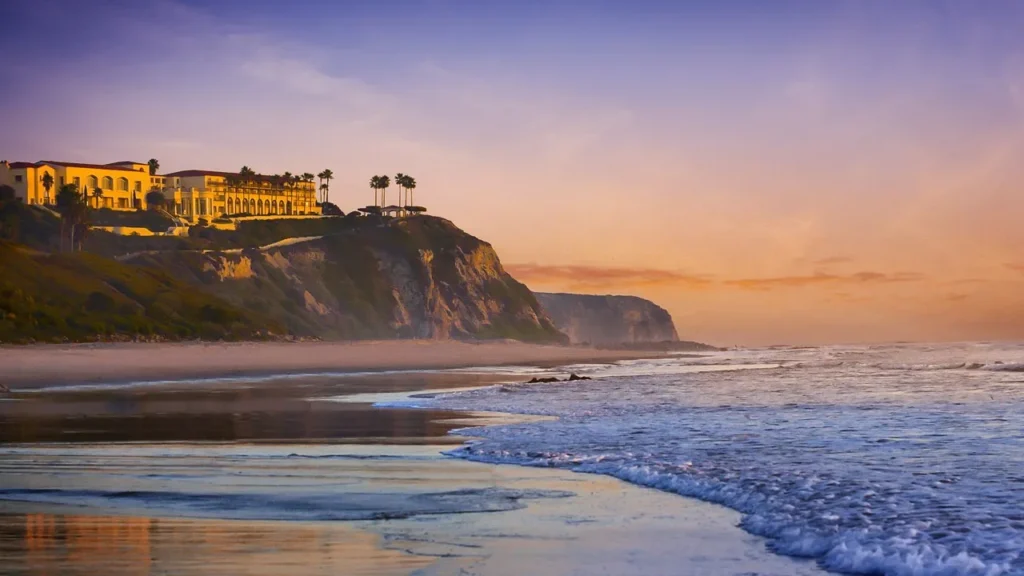
Oversimplification risks are particularly high when evaluating the “Marine Sanctuary” versus the “Resort Beach.” A marine sanctuary, like California’s La Jolla Cove, offers a high-biodiversity environment that facilitates “Awe-Induction,” a psychological state linked to reduced systemic inflammation. Conversely, a standard resort beach may be plagued by “Acoustic Pollution”—the constant hum of watercraft and crowds—which prevents the very neurological down-regulation the participant is seeking. Therefore, the “best” retreat must be defined by its “Silence Profile” and its proximity to undisturbed ecosystems.
Furthermore, we must account for “Circadian Reinforcement.” The best coastal sites provide unhindered access to the horizon, allowing the retina to capture the specific wavelengths of blue and orange light necessary to reset the master clock. A retreat that prioritizes indoor luxury over outdoor exposure fails this basic biological requirement. Legitimacy in this sector is measured by how effectively the retreat facilitates the “Oceanic Reset”—the stripping away of digital noise in favor of the rhythmic, predictable cadence of the sea.
Contextual Background: From Gilded Age Sanatoriums to Modern Sentinels
The evolution of the American coastal retreat is a history of “Medicalized Nature.” In the late 19th and early 20th centuries, coastal towns like La Jolla, California, and Amelia Island, Florida, were marketed as “Health Sanatoriums” for those suffering from respiratory ailments and “neurasthenia” (modern-day burnout). The “Cottage Era” saw the construction of redwood bungalows designed specifically to “bring the seashore indoors,” prioritizing ventilation and natural light over insulation.
Following World War II, the “Resort Explosion” shifted the focus toward leisure and consumption. The coastline became a playground for the burgeoning middle class, and the “retreat” was largely replaced by the “vacation.” During this phase, the therapeutic intent was diluted, replaced by an emphasis on nightlife, motorized recreation, and standardized amenities.
Today, in 2026, we are experiencing a “Post-Leisure Renaissance.” Travelers are returning to the original medicalized intent of the coast, but with the added precision of modern neuroscience and bio-hacking. The contemporary “Sentinel” retreat—located in places like the Lost Coast of California or the Bold Coast of Maine—reclaims the austerity of the early 20th-century sanatorium while integrating advanced recovery technologies. We have moved from “viewing” the sea to “interacting” with its cellular and neurological benefits.
Conceptual Frameworks for Evaluating Coastal Immersions
1. The “Blue Mind” Threshold
This framework measures a retreat’s ability to move a participant from a “Red Mind” (anxious, over-stimulated) to a “Blue Mind” (calm, creative, unified).
-
Criterion: Does the retreat provide at least 4 hours of daily “uninterrupted horizon time”?
-
Failure Mode: Retreats that are “beach-adjacent” but require navigating traffic or commercial zones to reach the water.
2. The “Thermal Contrast” Model
Evaluates the retreat based on its use of water temperature as a biological stimulus.
-
Logic: Immersions in the “Cold Waters” of the Atlantic (Maine/Massachusetts) or the Pacific (Washington/Oregon) trigger a higher metabolic and immune response than warm-water lounging.
-
Trade-off: High discomfort for high biological reward.
3. The “Ecological Connectivity” Index
Measures how integrated the retreat is with the local marine biology.
-
Indicator: Does the program include “Regenerative Activities” (e.g., kelp restoration, sea turtle monitoring) or merely “Consumptive Activities” (e.g., jet skiing)?
-
Insight: Psychological data suggests that “Giving Back” to the ecosystem accelerates the healing process more than passive relaxation.
Taxonomy of Coastal Varieties: Categories and Ecological Trade-offs
Identifying the best coastal retreats in the United States requires a categorical breakdown of how different coastlines impact the human system.
| Coastline | Signature Ecology | Psychological Impact | Metabolic Load |
| Pacific Northwest | Kelp Forests/Cool Mist | “Internalization” & Solitude | High (Thermal stress) |
| Southern California | Marine Reserves/Arid Sun | “Vitality” & Social Flow | Moderate |
| Gulf Coast | Quartz Sand/Warm Saline | “Cocooning” & Deep Rest | Low |
| Mid-Atlantic | Dunes/High Wind | “Invigoration” & Clarity | Moderate |
| Bold Coast (Maine) | Granite Cliffs/Deep Cold | “Resilience” & Perspective | Very High |
| Hawaiian Islands | Volcanic/Tropical Flora | “Integration” & Spirituality | Moderate |
Decision Logic: The “State-Lineage” Match
If your primary goal is “Inflammation Reduction,” the high-salinity, low-wind environments of the Florida Gulf Coast are superior. If the goal is “Cognitive Sharpening,” the cold-water immersions and rugged terrain of the Washington San Juan Islands provide the necessary hormetic challenge.
Detailed Real-World Scenarios and Failure Modes
Scenario 1: The “Tropical Mirage” in Florida
-
The Error: A practitioner seeking “Deep Silence” books a luxury waterfront villa in Destin, Florida, during March.
-
The Failure Mode: “Acoustic Overload.” While the beach is beautiful, it is peak “Spring Break” season. The constant noise of beach crowds and aircraft prevents the amygdala from de-escalating.
-
Second-Order Effect: The participant returns home with high cortisol levels, despite the “luxury” setting.
Scenario 2: The “Lost Coast” Isolation
-
The Context: An executive books a remote retreat in Shelter Cove, California, for “Digital Detox.”
-
The Failure Mode: “Logistical Friction.” The road into Shelter Cove is notorious for destroying brake pads and causing motion sickness. The participant arrives in a state of high sympathetic arousal.
-
The Decision: A “Sentinel” retreat requires a “Buffer Day” for travel recovery before the wellness curriculum begins.
Scenario 3: The “Maine Bold Coast” Resilience
-
The Context: A group chooses a cliffside meditation retreat in Lubec, Maine, for “Perspective.”
-
The Success: The extreme tides (the highest in the world nearby) and the dramatic granite cliffs provide a “Geological Perspective” that makes personal problems feel transient. This is a classic “High-Awe” environment.
Economics of the Shoreline: Cost Dynamics and Value Assessment
The “Real Price” of a coastal retreat includes the “Prime Location Premium” and the “Environmental Maintenance Fee.”
| Tier | Price Range (Weekly) | Infrastructure | Hidden Cost |
| Ultra-Luxury | $12,000 – $25,000 | Private Island/Clinical Staff | Social isolation/Aesthetic trap |
| Professional | $3,500 – $7,000 | Boutique/Marine Sanctuary | Travel logistics/Car rental |
| “Raw” Sentinel | $1,200 – $2,800 | Cabins/Yurts/Off-grid | Physical discomfort/No AC |
The “Blue-Space Value” Ratio: A retreat that is 50 yards from the water is often 3x more expensive than one that is 5 miles away. However, the “Neurobiological Yield” of being within earshot of the waves 24/7 is significantly higher, making the closer location more “cost-effective” for neurological resets.
Tools, Strategies, and Support Systems
To maximize the efficacy of a coastal immersion, the participant should employ a “Coastal Readiness Protocol”:
-
The “Salt-Air” Acclimatization: Spend 20 minutes outdoors upon arrival to calibrate the respiratory system to the higher humidity and mineral content.
-
The “Digital Tide” Limit: Use a “Digital Lockbox” for phones. The ocean’s horizon is the primary “Attentional Anchor.”
-
Marine-Grade Gear: Invest in high-quality wool or technical shells for PNW/Maine retreats. Being cold and wet is a primary barrier to meditative depth.
-
Circadian Horizon-Watching: A mandatory 15-minute “Sunrise Walk” to anchor the SCN (Suprachiasmatic Nucleus).
-
The “Blue Mind” Playlist: If the retreat is in a high-noise area, use “Brown Noise” or “Pink Noise” that mimics wave frequencies to maintain the state.
-
Local Ecology Guide: Carry a small waterproof guide to local birds or marine life. “Naming” the environment fosters “Ecological Belonging.”
The Risk Landscape: Compounding Environmental and Logistical Risks
Coastal areas are high-volatility environments where risks often compound.
-
The “Humidity-Inflammation” Loop: High humidity in tropical retreats can trigger latent mold sensitivities or joint inflammation in certain phenotypes.
-
The “Erosion Exit”: Coastal properties are increasingly prone to “King Tides” or sudden erosion events. A retreat with no “Erosion Mitigation Plan” is a logistical risk in 2026.
-
The “Tourist-Wellness” Conflict: When a retreat is held within a public-access beach park (like many Florida sites), the “Privacy Risk” is high. Without a dedicated “Private Zone,” the feeling of being watched prevents deep vulnerability in practice.
Governance and Post-Retreat Integration
The “Oceanic Reset” is fragile. Governance involves the “Post-Immersion 72-Hour Rule.”
-
Avoid “Hard Landings”: Do not transition from a quiet Maine cliffside to a New York City office on the same day.
-
The “Blue-Light Buffer”: Maintain a strict ban on artificial blue light for 3 nights after returning from a coastal retreat to preserve the newly recalibrated circadian rhythm.
-
Monitoring the “Fade”: Use a wearable device to track if your “Resting Heart Rate” stays low for the weeks following the retreat. If it spikes within 48 hours, the “Transferability” of the retreat was poor.
Measurement, Tracking, and Evaluation of Success
-
Leading Indicator: “Vagal Tone Improvement.” Measured via Heart Rate Variability (HRV). A successful coastal retreat should see a 15-25% increase in baseline HRV.
-
Qualitative Signal: “Soft Fascination.” The ability to stare at the sea for 30 minutes without feeling bored or the urge to check a device.
-
Quantitative Data: “Sleep Architecture.” A notable increase in REM and Deep Sleep cycles, often due to the “Acoustic Masking” of the waves.
Common Misconceptions and Oversimplifications
-
Myth: “The best retreats are always in Hawaii or California.”
-
Correction: The “Bold Coast” of Maine and the “Golden Isles” of Georgia offer deeper silence and more “Raw Nature” than many over-trafficked Western sites.
-
Myth: “You need to be a surfer to enjoy a coastal retreat.”
-
Correction: The most profound benefits are “Passive”—simply breathing the negative ions and viewing the horizon.
-
Myth: “Warm water is better for healing.”
-
Correction: Cold-water immersion (PNW/Maine) is a more powerful trigger for “Mitochondrial Biogenesis” and “Dopamine Regulation.”
-
Myth: “Beachfront is always quiet.”
-
Correction: Beachfront can be the loudest place on earth due to wind, surf, and commercial activity. “Sound-Audit” is your destination.
Ethical and Practical Considerations
In 2026, the best coastal retreats in the United States are those practicing “Regenerative Tourism.” This means the retreat is not just a consumer of the view, but a protector of it. A retreat that uses “Single-Use Plastics” or contributes to “Run-off Pollution” is fundamentally at odds with the “Wellness” it claims to sell. Practitioners should prioritize “Indigenous-Partnered” retreats, particularly in Hawaii or the Pacific Northwest, where the curriculum is rooted in the ancestral wisdom of the “First Coastline Protectors.”
Conclusion
The pursuit of the American coastal retreat is, at its heart, an attempt to return to a fundamental human frequency. By moving beyond the “Aesthetic Trap” and engaging with the coast as a rigorous biological and neurological laboratory, we can unlock states of resilience and clarity that are impossible to find inland. Whether it is the granite-bound solitude of Lubec or the marine biodiversity of La Jolla, the coast remains our most powerful sentinel against the fragmentation of modern life. The sea does not just provide a view; it provides a mirror—and the “best” retreat is the one that allows you to see yourself clearly in its reflection.