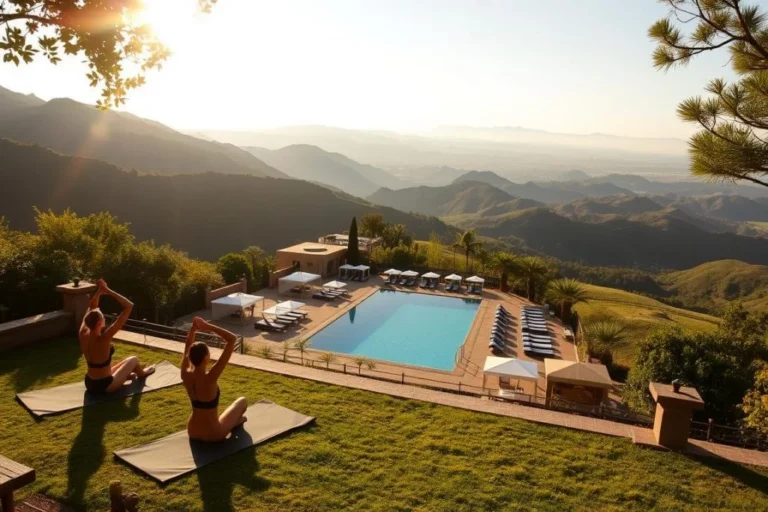
Best Wellness Retreats for Professionals: A 2026 Strategic Audit
The modern professional operates within a high-velocity environment characterized by “cognitive debt”—a compounding state of mental fatigue, decision paralysis, and physiological dysregulation. As we navigate the complexities of 2026, the traditional vacation has proven insufficient as a corrective measure for the deep-seated burnout inherent in high-stakes roles. This realization has shifted the market from leisure-based hospitality toward “Precision Restoration,” where the objective is not mere relaxation, but the systemic recalibration of the individual’s operational capacity.
Selecting from the best wellness retreats for professionals requires a departure from the consumerist mindset of seeking luxury amenities. Instead, the focus must be on “Functional ROI.” For the executive, the practitioner, or the high-output creative, time is the most constrained resource. Consequently, any intervention must be audited for its ability to lower the “Allostatic Load”—the cumulative wear and tear on the body caused by chronic stress—and improve “Cognitive Endurance.” This involves a sophisticated understanding of neurobiology, metabolic health, and environmental psychology.
The convergence of hospitality and clinical science has birthed a new category of “Human Performance Sanctuaries.” These environments serve as controlled laboratories where variables such as light frequency, nutrient density, and sensory input are meticulously engineered to facilitate recovery. However, the efficacy of these programs is often obscured by marketing hyperbole. To find genuine value, one must look past the aesthetic of the “wellness resort” and examine the underlying physiological protocols and the rigor of the data-tracking systems employed by the facility.
Understanding “Best Wellness Retreats for Professionals”
Defining the best wellness retreats for professionals necessitates a multi-dimensional lens that distinguishes between “Aesthetic Wellness” and “Structural Transformation.” A fundamental misunderstanding persists that professional wellness is achieved through pampered isolation. In reality, a true professional-grade retreat acts as a “Nervous System Reset.” It targets the sympathetic nervous system’s chronic over-activation—the “fight or flight” response common in corporate leadership—and facilitates a shift into the parasympathetic “rest and digest” state.

Oversimplification risks are significant when individuals view these retreats through the lens of a “spa break.” The most efficacious plans for professionals are those that acknowledge the specific stressors of high-output careers: decision fatigue, blue-light toxicity, circadian disruption, and social-emotional isolation. A high-value retreat doesn’t just provide a massage; it provides a “Cognitive Defrag.” This involves the strategic use of silence, specific movement patterns, and often, clinical-grade diagnostics to identify the individual’s “Biological Bottleneck.”
Furthermore, one must account for the “Re-entry Friction.” A common failure of general wellness programs is their lack of contextual relevance to a professional’s daily life. If a retreat requires three hours of meditation in a remote cave to be effective, its utility for a partner at a law firm or a software engineer is negligible. The “best” options for this demographic are those that offer “Portable Protocols”—high-impact, low-time-investment strategies that can survive the transition back to the boardroom or the laboratory.
Historical Context: From Sanatoriums to Bio-Optimization
The lineage of professional-focused wellness can be traced to the 19th-century “Sanatorium Movement,” where the intellectual elite of Europe and America were prescribed “Climate Cures” for neurasthenia—a catch-all diagnosis for what we now call burnout. These early retreats emphasized “Hygienic Living,” focusing on fresh air, mineral waters, and the total removal of the patient from their professional environment. It was the first recognition that the “Life of the Mind” required the “Maintenance of the Body.”
In the mid-20th century, this evolved into the “Executive Health Program,” often housed within major clinical centers like the Mayo Clinic. These were primarily diagnostic, focusing on the early detection of cardiovascular disease through stress tests and physical exams. While clinically sound, they lacked the “integrated” or “holistic” component, treating the professional as a biological machine rather than a complex system of mind, body, and environment.
Today, we have entered the “Bio-Optimization Era.” Modern professional retreats have moved beyond mere diagnostics into proactive “Systemic Tuning.” We see the integration of neurofeedback, epigenetic testing, and “Hormetic Stress” therapies (like controlled heat and cold exposure) into the hospitality experience. The modern sanctuary is no longer just a place to hide from work; it is a place to rebuild the capacity to perform work at a higher, more sustainable level.
Conceptual Frameworks for Executive Restoration
To evaluate a program’s potential efficacy, professionals can use three primary mental models:
1. The “Signal-to-Noise” Metabolic Model
Modern professional life is an environment of extreme “biological noise”—artificial light, ultra-processed food signals, and digital fragmentation. A top-tier retreat is evaluated by its ability to amplify “Clean Signals” (circadian light, nutrient density, deep focus) while ruthlessly filtering noise.
-
Limit: This model can lead to “Orthorexia” or social isolation if taken to an extreme upon return to the real world.
2. The “Attention Restoration Theory” (ART)
Developed by the Kaplans, ART posits that environments with “Soft Fascination” (like a forest or a coast) allow the “Directed Attention” used in professional work to fully recover.
-
Mechanism: The brain shifts from the “Top-Down” control required for spreadsheets and meetings to “Bottom-Up” processing, which facilitates creativity and broad-perspective thinking.
3. The “Hormetic Efficiency” Framework
This model utilizes “Controlled Stressors” to trigger cellular repair.
-
Factor: The retreat must apply the correct “dose” of stress (e.g., a 10-minute sauna or a 3-minute ice bath) followed by a 10x recovery period. For the already exhausted professional, the “dose” must be carefully calibrated to avoid pushing them into clinical overtraining or adrenal fatigue.
Taxonomy of Professional Wellness Modalities
The landscape of best wellness retreats for professionals is categorized by the “Primary Intervention” they utilize. Each has distinct trade-offs.
| Category | Primary Mechanism | Best For | Trade-offs |
| Medical/Clinical | Diagnostic Labs; IV therapy | Longevity; Metabolic reset | Can feel sterile/clinical |
| Bio-Optimization | Neurofeedback; Red Light | Cognitive Edge: Sleep | High tech-dependency |
| Nature-Immersion | Shinrin-yoku; Hiking | Stress; Perspective | Weather dependent; Basic |
| Somatic/Movement | Yoga; Mobility; Breath | Physical Pain; Tension | Requires high discipline |
| Contemplative | Silence; Meditation | Burnout; Decision Fatigue | High “psychological labor.” |
| Nutritional/Detox | Gut Mapping; FMD | Energy; Inflammatory load | Social friction; Willpower |
Decision Logic: The “Biological Bottleneck” Audit
Professional selection should follow the “Inverse Property”: Choose the retreat that provides the biological opposite of your daily life. If your day is high-tech and indoor-centric, a high-tech bio-optimization lab is less effective than a “Primitive” nature-immersion. If your life is physically demanding but mentally stagnant, a Contemplative retreat is the superior choice.
Real-World Scenarios and Performance Failure Modes
Scenario 1: The “Digital Nomad” Founder
-
Situation: Chronic sleep fragmentation and “Screen Fatigue.”
-
Failure Mode: Attending a “Bio-hacking” retreat that involves constant wearable tracking and data-monitoring.
-
Result: The focus on “metrics” prevents the nervous system from ever fully disengaging, leading to continued sympathetic dominance.
-
The Correction: A “Darkness” or “Digital Fasting” retreat where the primary goal is sensory deprivation.
Scenario 2: The “Burned-Out” Surgeon
-
Situation: High empathetic stress and physical rigidity from long hours in the OR.
-
Failure Mode: A “Fitness Bootcamp” style retreat.
-
Result: Adding physical cortisol to an already stressed endocrine system triggers an injury or systemic inflammation.
-
The Correction: A “Somatic/Restorative” retreat focusing on Fascial Release and vagal tone regulation.
Economic Dynamics: Opportunity Cost and Resource Allocation
For the professional, the “Price” of the retreat is rarely the highest cost. The “Total Investment” is a calculation of direct capital, time out of market, and the cost of “Integration.”
| Cost Category | Example | Impact on ROI |
| Direct Capital | Tuition, Lodging, Diagnostics | The “Sunk Cost” motivator |
| Opportunity Cost | Lost billable hours/equity growth | The “Time Tax” |
| Transition Cost | Prep-work and Re-entry buffer | The “Maintenance Load” |
| Integration | Post-retreat coaching/supplements | The “Dividend” multiplier |
Range-Based Resource Table (7-Day Duration)
| Tier | Investment (USD) | Primary Outcome | Sustainability |
| Professional | $3,500 – $7,000 | Basic Reset; Rest | 2-4 Weeks |
| Strategic | $8,000 – $15,000 | Data-driven habit shifts | 3-6 Months |
| Legacy | $25,000+ | Epigenetic/Longevity shift | 1 Year+ |
Tools and Strategies for Program Integration
A successful retreat for a professional must bridge the gap between “State” (how you feel there) and “Trait” (how you function here).
-
Continuous Biometrics (The Baseline): Use wearables for 30 days before the retreat to identify baseline HRV and sleep cycles.
-
The “72-Hour Buffer”: Never return to the office on a Monday. Returning on a Thursday or Friday allows for a “Soft Landing” and preserves the retreat’s benefits.
-
Circadian Entrainment: Use “Red-shifted” lighting in the home office to maintain the melatonin-reset achieved during the retreat.
-
The “Micro-SOP”: Developing a Standard Operating Procedure for high-stress days (e.g., a 4-minute box-breathing protocol learned at the retreat).
-
Kitchen Architecture: Utilizing meal-prep or specific nutritional anchors learned at the retreat to reduce decision fatigue upon return.
-
Neuro-Anchoring: Using a specific scent or sound used during the retreat to “trigger” a relaxation response in a stressful boardroom.
The Risk Landscape: Identifying Quality and Integrity
The expansion of the wellness market has led to “Wellness-Washing.” For the discerning professional, identifying “Failure Modes” in a potential facility is critical:
-
The “Generalist” Trap: Facilities that claim to solve everything from weight loss to spiritual enlightenment. High-performance retreats should be specialized.
-
The “Technology Theater”: Utilizing expensive machines (Cryo, IV, PEMF) without a coherent physiological protocol. Technology is a tool, not a cure.
-
Staff Credentialing: Ensuring that “Wellness Leads” are not just enthusiasts but have clinical or academic backgrounds in exercise science, nutrition, or psychology.
-
The Social Burden: Some high-end retreats are essentially “social clubs.” If the retreat requires you to “network,” you are not recovering; you are working in a different costume.
Governance, Maintenance, and Post-Retreat Adaptation
Maintaining the “Retreat Dividend” requires a “Governance Plan.” This is the move from “taking a vacation” to “managing a lifestyle system.”
-
Monitoring: Monthly reviews of HRV (Heart Rate Variability) to check for “Drift” back into chronic stress.
-
Adjustment Triggers: If sleep efficiency drops below 85% for three consecutive nights, it triggers a “Maintenance Protocol” (e.g., a 24-hour digital fast).
-
Layered Maintenance Checklist:
-
Daily: Morning light exposure (10 mins); No screens 60 mins before bed.
-
Weekly: One “Social Silence” window (4 hours); One hormetic session (Sauna/Cold).
-
Monthly: One “Nature Immersion” (4 hours minimum).
-
Yearly: One “Deep System Reset” (the 7-day retreat).
-
Measurement, Tracking, and Evaluation of Success
Evaluation of the best wellness retreats for professionals should be based on “Functional Output” rather than subjective “Feeling.”
-
Leading Indicator: The “Reactivity Delta.” Measuring the gap between a stressor (a rude email, a market dip) and your emotional reaction. A larger gap indicates better vagal tone.
-
Quantitative Signal: HRV (Heart Rate Variability). A sustained increase in R-R interval regularity is the gold standard for nervous system recovery.
-
Lagging Indicator: “The Creative Strike Rate.” The number of high-quality, “visionary” ideas or breakthroughs produced in the 90 days post-retreat compared to the 90 days prior.
Documentation Examples:
-
The “Sleep Architecture” Log: Comparing Deep Sleep and REM percentages before and after the intervention.
-
The “Conflict Delta” Journal: Tracking interpersonal friction at work and noting the intensity of the response.
Common Misconceptions and Oversimplifications
-
Myth: “A high-priced retreat is more effective.”
-
Correction: Price often pays for real estate and aesthetics. Efficacy pays for expert contact hours and diagnostic rigor.
-
Myth: “I need to go for at least two weeks.”
-
Correction: A 3-day “Precision Pulse” can be more effective than a 14-day “Vague Stay” if the intervention is targeted correctly.
-
Myth: “I should disconnect entirely.”
-
Correction: For some professionals, the stress of total disconnection causes more harm. A “Structured Connectivity” window (30 mins a day) is often more restorative.
-
Myth: “Wellness is about avoiding stress.”
-
Correction: Wellness is about building the capacity to handle stress. The goal is “Robustness,” not “Fragility.”
Conclusion
The pursuit of professional vitality is not a luxury; it is a fundamental requirement for sustained excellence in a high-complexity world. The best wellness retreats for professionals serve as more than just a reprieve from labor—they are strategic investments in the individual’s biological and cognitive infrastructure. By treating the retreat as a systemic intervention rather than a holiday, and by applying rigorous frameworks of measurement and maintenance, the modern professional can ensure that their most valuable asset—their own health—remains resilient against the pressures of their career. Ultimately, the success of a retreat is measured not by the peace found in the sanctuarybut by the clarity and endurance brought back into the world.