Top Wellness Experiences in America: A Definitive 2026 Strategy Guide
The modern quest for health in the United States has undergone a tectonic shift, moving from the peripheries of “self-care” into the core of systemic life management. As we navigate the complex stressors of 2026—characterized by digital saturation, cognitive fragmentation, and the erosion of circadian boundaries—the concept of the “wellness experience” has evolved into a sophisticated biological intervention. No longer defined merely by aesthetic luxury or a reprieve from labor, the most effective domestic retreats now function as high-fidelity laboratories for physiological and psychological recalibration.
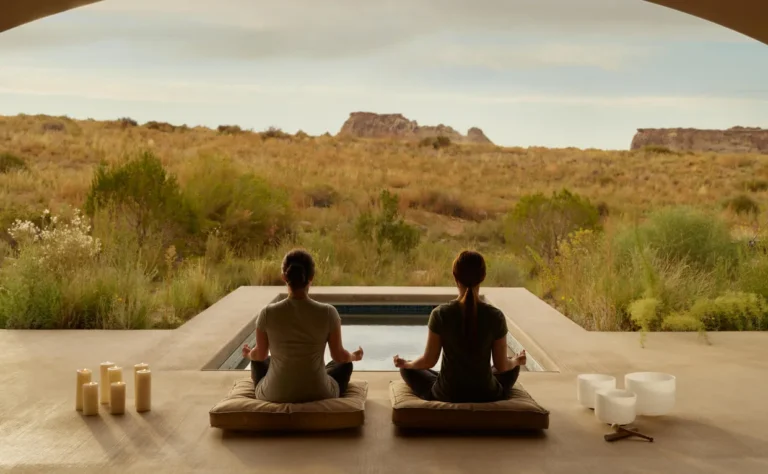
This evolution is driven by a deepening understanding of the “Allostatic Load”—the cumulative wear and tear on the body caused by chronic stress. The American landscape, with its vast ecological diversity, offers a unique topographical palette for addressing this load. From the high-deserts of the Southwest that utilize the psychology of “vastness” to induce awe, to the temperate rainforests of the Pacific Northwest that leverage phytoncides for immune modulation, the environment itself is being used as a primary therapeutic agent. This is a departure from the “hospitality-first” model toward a “biological-first” paradigm.
For the high-stakes individual or the professional seeking a sustainable return on their attention, navigating the market of top wellness experiences in America requires more than a cursory review of amenities. It requires an analytical framework capable of distinguishing between “Aesthetic Wellness, —which provides temporary sensory pleasure, and “Structural Transformation, —which induces lasting epigenetic and neurological shifts. This article serves as a definitive audit of the domestic wellness landscape, deconstructing the mechanics of restoration and providing a roadmap for strategic health investment.
Understanding “Top Wellness Experiences in America”
The nomenclature of wellness is often intentionally vague, serving marketing objectives rather than clinical ones. To engage meaningfully with top wellness experiences in America, one must first dismantle the conflation of “pampering” with “healing.” While a high-end spa may offer temporary relief, a true wellness experience is defined by its ability to facilitate “Nervous System Regulation.” This is the movement of the participant from a state of sympathetic dominance (fight-or-flight) into parasympathetic activation (rest-and-digest).
A common misunderstanding is that “luxury” is the primary driver of efficacy. In reality, luxury is often an insulation from the very environmental signals required for restoration. True quality in this sector is better measured by “Operational Density”—the ratio of expert practitioners (neuroscientists, functional nutritionists, somatic therapists) to guests. A resort that offers a gold-plated aesthetic but lacks a coherent physiological protocol is an entertainment venue, not a wellness destination.
Oversimplification risks are high when individuals categorize experiences by price point alone. The “Value” of a wellness intervention is actually a function of its “Post-Experience Dividend”—the duration of the physiological benefits once the participant returns to their default environment. If a $2,000-per-night stay results in benefits that evaporate within 48 hours of re-entering the city, it has failed as a wellness experience. Conversely, a $500-per-night immersion that provides the tools for lasting circadian and metabolic regulation is a high-yield asset.
Historical and Systemic Evolution of the American Sanctuary
The American lineage of wellness begins not with the modern retreat, but with the 19th-century “Sanatorium Movement.” Figures like John Harvey Kellogg in Battle Creek, Michigan, established the first systematic domestic laboratories for “Biologic Living.” These early sites focused on diet, light therapy, and exercise, treating the body as a machine that required periodic tuning. This was the “Mechanistic Era” of American wellness.
Following the post-war boom, the 1970s marked the “Integrative Pivot.” The emergence of centers like Esalen in Big Sur shifted the focus from the machine-body to the “Mind-Body.” This period introduced the psychological and spiritual dimensions—meditation, yoga, and group process—as essential components of health. This was the era of “Human Potential,” where wellness became a tool for self-actualization.
Today, in the mid-2020s, we have entered the “Bio-Optimization Era.” This is characterized by the integration of clinical data into the hospitality experience. We are no longer guessing about our health; we are measuring it in real-time. Leading destinations now utilize continuous glucose monitoring (CGM), heart rate variability (HRV) analysis, and genetic testing to provide a “Precision Wellness” experience that is as data-driven as it is restorative.
Conceptual Frameworks and Mental Models
1. The “Signal-to-Noise” Metabolic Framework
This model posits that modern life is an environment of extreme “biological noise”—artificial blue light, endocrine disruptors, and digital fragmentation. A top-tier experience is evaluated by its ability to amplify “Clean Signals”—circadian-aligned light, nutrient-dense local food, and deep silence—while ruthlessly filtering noise.
-
Constraint: This model is less effective for social-centric wellness, where communal noise is an intentional part of the therapy.
2. The “Attention Restoration Theory” (ART)
Developed by the Kaplans, this model suggests that nature provides “Soft Fascination”—a type of attention that doesn’t deplete our cognitive resources. The best American retreats utilize specific landscapes (desert, forest, coast) to allow the “Directed Attention” used in professional work to fully recover.
-
Limit: Over-exposure to nature without “Refuge” (physical safety and comfort) can trigger survival stress, negating the restoration.
3. The “Hormetic Stress” Model
This framework utilizes “Controlled Stressors”—heat (saunas), cold (plunges), and exertion—to trigger cellular repair mechanisms.
-
Factor: The efficacy of this model depends entirely on the “Recovery Window.” Without adequate downtime between stressors, it simply adds to the participant’s total allostatic load.
Key Categories and Regional Variations: A Taxonomy
The geography of the United States dictates the primary biological mechanism of the experience.
| Category | Typical Location | Primary Mechanism | Best For |
| High-Desert Sanctuaries | Arizona, Utah | Awe & Vastness | Perspective Shifts; Cognitive Defrag |
| Coastal Restoratives | California, Maine | Negative Ions; “Blue Mind” | Emotional Regulation; Respiratory Health |
| Montane Longevity Labs | Colorado, Utah | Hormesis; High-Altitude | Metabolic Grit; Physical Peak |
| Old-Growth Immersions | PNW, Appalachia | Phytoncides; Silence | Immune Support; Sensory Down-Reg |
| Urban Medical-Wellness | NYC, Chicago, LA | Precision Data; Tech | High-Stakes Pro’: Bio-optimization |
| Thermal/Mineral Springs | Arkansas, Idaho | Mineral Absorption | Musculoskeletal Recovery; Sleep |
Decision Logic: The “Biological Need” Audit
The selection of an experience should follow the “Antagonistic Principle”: Choose the environment that is the direct opposite of your daily operational context. If your life is high-density and urban, a Desert Sanctuary is significantly more restorative than an Urban Medical-Wellness center, regardless of the latter’s technical sophistication.
Detailed Real-World Scenarios
Scenario 1: The “Burned-Out Executive” (Sympathetic Dominance)
-
Situation: High cortisol, sleep latency issues, fragmented attention.
-
The Experience: A “Silent” Forest Retreat (e.g., in the Catskills or PNW).
-
Decision Point: Choosing between a tech-heavy spa or a low-tech nature immersion.
-
Logic: Tech-heavy environments often require more “Directed Attention.” For this individual, the “Refuge” of a forest and the absence of choices (fixed menus, no Wi-Fi) is the superior intervention.
Scenario 2: The “High-Performance Athlete” (Physical Stagnation)
-
Situation: Overtraining syndrome, plateaued metrics.
-
The Experience: A High-Altitude Longevity Lab (e.g., Colorado).
-
Decision Point: Access to advanced recovery tech (Hyperbaric, Cryo) vs. general leisure.
-
Failure Mode: If the athlete continues to train at high intensity during the “wellness” stay, they risk further depletion rather than restoration.
Scenario 3: The “Creative Unlocking” (Decision Fatigue)
-
Situation: Emotional blockages, loss of visionary capacity.
-
The Experience: A Southwest “Awe” Immersion (e.g., Sedona).
-
Second-Order Effect: The vastness of the desert triggers the “Small Self” theory—re-contextualizing personal problems against the scale of geological time, facilitating breakthrough thinking.
Planning, Cost, and Resource Dynamics
The “Sticker Price” of top wellness experiences in America is often the least important metric. The true cost includes the “Logistical Tax”—the stress of reaching the destination.
| Tier | Avg. Daily Rate (USD) | Primary Value Driver | Opportunity Cost |
| Ultra-Premium | $2,500 – $5,000 | 1:1 Expert Density; Radical Privacy | High (often remote travel) |
| Premium | $1,200 – $2,400 | Diverse Programming; Aesthetic Comfort | Moderate |
| Boutique/Specialist | $600 – $1,100 | Niche Expertise (e.g., Yoga, Detox) | Variable |
| Urban Integrated | $300 – $800 | Convenience; Data Precision | Low |
Resource Variability: A “Self-Directed” nature retreat in a National Park may cost $50/day but requires high “Navigation Energy.” A $2,500/day resort removes all decision-making, which is itself a luxury resource for those suffering from decision fatigue.
Tools, Strategies, and Support Systems
To maximize the yield of a stay, several “Bridge Tools” are necessary to carry the benefits back to daily life:
-
HRV Wearables: Using Oura, Whoop, or similar to quantify the “Restoration Baseline.”
-
Digital Sequestration: Utilizing Faraday bags or “dumb phones” during the stay.
-
Circadian Lighting: Ensuring the retreat environment uses red-shifted light after sunset.
-
Somatic Experiencing: Access to trauma-informed practitioners who can “release” physical tension.
-
Gut-Microbiome Analysis: Tailoring nutrition to the individual’s specific flora.
-
Neurofeedback: Tools like Muse or OpenFocus to train the brain for Alpha/Theta states.
-
Integration Coaching: Post-experience sessions to translate retreat habits into the home environment.
-
“Place-Based” Rituals: Utilizing local flora or minerals (e.g., desert sage, sea salt) to anchor the experience.
Risk Landscape and Failure Modes
The wellness industry suffers from “Spirituality-Washing” and “Bio-hacking Hyperbole.”
-
The “Amenity Trap”: A resort with 20 different types of saunas but no clear protocol on how to use them for health. This leads to “Wellness FOMO”—the stress of trying to do everything.
-
The “Generalist” Risk: A facility where the “Wellness Director” has no clinical background, leading to “trending” but potentially contradictory advice.
-
Compounding Risk: The “Detox Crisis”—resorts that push radical dietary changes without medical supervision, leading to systemic inflammation or “healing crises” that are actually just biological distress.
-
The Social Burden: Some “wellness” experiences are essentially high-society social events. If the pressure to “be seen” exists, the cortisol-lowering benefits are negated.
Governance, Maintenance, and Long-Term Adaptation
A visit to one of the top wellness experiences in America should be viewed as a “Systemic Reset” that requires a “Governance Plan” upon return.
-
The 72-Hour Buffer: Never return to a high-stress work environment within 72 hours of a retreat. Re-entry shock can erase 50% of the gains.
-
Review Cycles: A quarterly “Micro-Retreat” (24-48 hours) to maintain the “Nervous System Setpoint.”
-
Adjustment Triggers: If sleep efficiency drops below 85% for more than 3 consecutive nights, it triggers a “Maintenance Review”—adjusting light, diet, and movement to retreat standards.
-
Layered Checklist:
-
Digital Sunset (No screens 90 mins before bed)
-
Morning Sunlight (10-15 mins outside)
-
Thermal Reset (Cold shower or sauna 3x weekly)
-
Measurement, Tracking, and Evaluation
How do you know if an experience was successful?
-
Leading Indicator: HRV (Heart Rate Variability). A sustained increase in HRV during and for two weeks after the stay.
-
Qualitative Signal: “The Reaction Gap.” Measuring the time between a stressor (e.g., a rude email) and your emotional reaction. A larger gap indicates better vagal tone.
-
Quantitative Signal: Cortisol Slopes. Measuring saliva cortisol in the morning vs. evening. A “steep” slope (high morning, low evening) is a sign of a regulated HPA axis.
-
Documentation Example: Keeping a “Gratitude of Awe” journal to measure the persistence of perspective shifts.
Common Misconceptions and Oversimplifications
-
Myth: “I need to go for at least a week to see results.”
-
Correction: Research suggests that a high-intensity 3-day “Pulse” can be as effective for resetting the nervous system as a 7-day stay if the “Signal-to-Noise” ratio is high.
-
Myth: “Wellness is about weight loss.”
-
Correction: Modern wellness is about “Metabolic Flexibility”—the body’s ability to switch between fuel sources and maintain stable energy.
-
Myth: “If I’m not doing something active, I’m wasting my time.”
-
Correction: In “Attention Restoration Theory,” stillness and “Soft Fascination” are often more productive for the brain than active hiking.
-
Myth: “Wellness is a women’s market.”
-
Correction: The fastest-growing demographic in premium wellness is the “Executive Male,” focusing on cognitive longevity and testosterone optimization.
Conclusion
The evolution of wellness in America reflects a broader cultural realization: that our current environments are biologically “hostile.” The top wellness experiences in America are no longer luxury indulgences; they are essential infrastructures for maintaining human sovereignty in a high-friction world. By applying a rigorous, analytical framework to these experiences—focusing on biological signals rather than aesthetic fluff—the individual ensures that they are not just “taking a break,” but are strategically investing in a more resilient and vital version of themselves. The ultimate luxury is not the resort stay itself, but the durable health that allows one to thrive long after the return home.